
1-805-484-2992
Quotes - Engineering - SalesA New Unit That Fits Where the Old One Stood
Most replacement calls start the same way: the unit on the floor is worn, leaking or undersized for what the line now runs, and the piping, the skid and the control loop around it are fine. The job is to supply a new sanitary exchanger that fits the connections and the footprint, meets the hygiene class the plant is audited to, and does the duty the line needs today rather than the duty it was bought for.
This branch shows how to identify what you have, what to measure when the nameplate is gone, and exactly what to send so the quote comes back as a matched unit with a price.
Request a Quote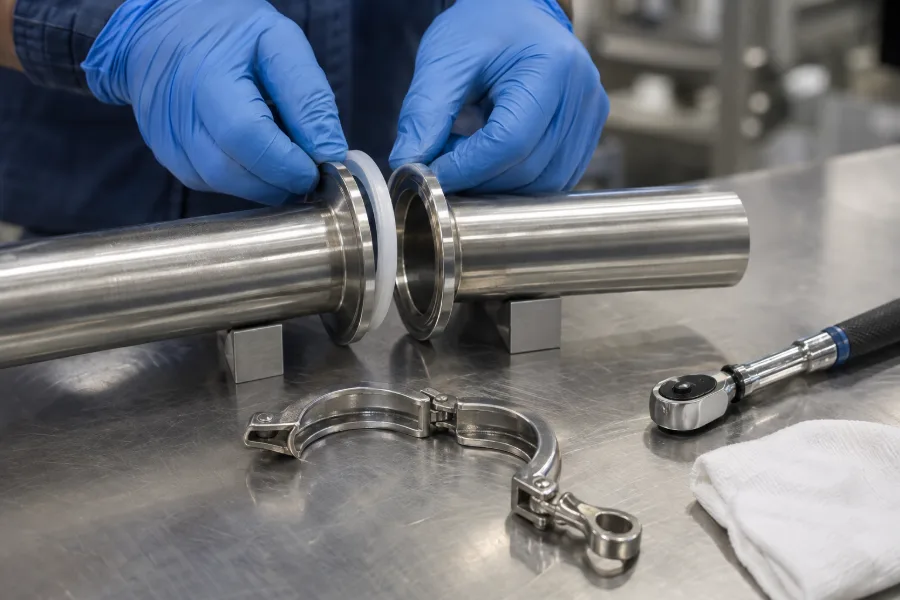
Three Routes to the Equivalent
Look up by manufacturer and model
- How to read the nameplate on the common sanitary plate, shell-and-tube and tube-in-tube units, what the model code usually encodes, and how the published data is matched to a new HeatX-supplied unit.
Match by dimensions and connections
- When there is no nameplate: shell OD, tube length, connection type and size, mounting, plate size and count, and frame length, measured so that the new unit drops into the existing piping.
What to send us
- The checklist that lets us price without a call back: product, flow, temperatures in and out, utility, pressure and temperature ratings, hygiene class, finish, connections, CIP and SIP, plus a drawing or a photo.
A replacement is matched on three things: the duty it must do, the connections it must meet, and the hygiene class the plant is audited to.
The model number gets us started; the nameplate data finishes the job.
Match the duty, not just the shell
The unit being replaced was sized for a duty that may no longer be the duty. Lines speed up, products change, and a heater bought for 6,000 lb/h is often running 8,000 by the time it wears out. A same-size replacement locks that shortfall in for another fifteen years. Give us the current flow and temperatures with the old unit's dimensions and we will tell you whether the same envelope still does the job or whether a longer bundle or a few more plates in the same frame gets you back to spec.
Keep what the plant has already approved
Hygiene class is the part of a replacement that is easiest to get wrong. If the old unit carried the 3-A symbol, the new one should too, or the next audit turns into a discussion. If the plant is validated to ASME BPE for the product line, the replacement needs the same finish, the same drainability and the same documentation package or the validation is reopened. Send the old unit's paperwork if you have it; if not, tell us what the plant is audited to and we will build to that.
When to upgrade instead of copying
A replacement is the cheapest moment to fix what was wrong with the original. A single-tubesheet unit on a boiler-water utility can become a double tubesheet for a small premium. A 32 Ra finish can become 20 Ra electropolished. A unit that would not drain can be rebuilt with a sloped shell and low-point drains. A plate pack that was always at the limit of its frame can be quoted in a frame with room to grow. None of that changes the piping connections, so the upgrade is free of installation cost.
Lead time and the outage
Standard sanitary shell-and-tube sizes and common plate configurations ship quickly; custom bundles with double tubesheets and full documentation take longer. If the old unit is still running, send the data now and order against the failure rather than after it. If it has already failed, tell us the date the line has to be back up and we will quote to it. Call and talk it through with an engineer: 1-805-484-2992
Common FAQs
It helps but it is not required. A nameplate photo, the connection sizes, the overall length and the shell or frame dimensions are enough to match the envelope, and the process data is enough to check the duty. A drawing simply saves a round of confirmation.
Yes, provided you tell us the ferrule size and the face-to-face or centerline dimensions. Tri-clamp sizes are standardized, so matching them is routine; the dimension that most often needs attention is the overall length between the product connections.
Often. A tighter tube pitch, a multi-pass head, enhanced tubes or additional plates in the same frame can add 20 to 40% to the duty without changing the connections. Give us the new flow and temperatures and we will say what the envelope allows.
That is a common reason for replacement. Give us the same dimensions and connections and the hygiene class the plant now needs, and we will quote a sanitary unit in the same envelope with tri-clamp connections, polished product contact and full drainability.
You get a drawing with the connection sizes and locations, overall dimensions, mounting and the thermal rating at your duty for approval before fabrication starts. Nothing is built until that drawing is signed off.
Related
Sizing & Selection
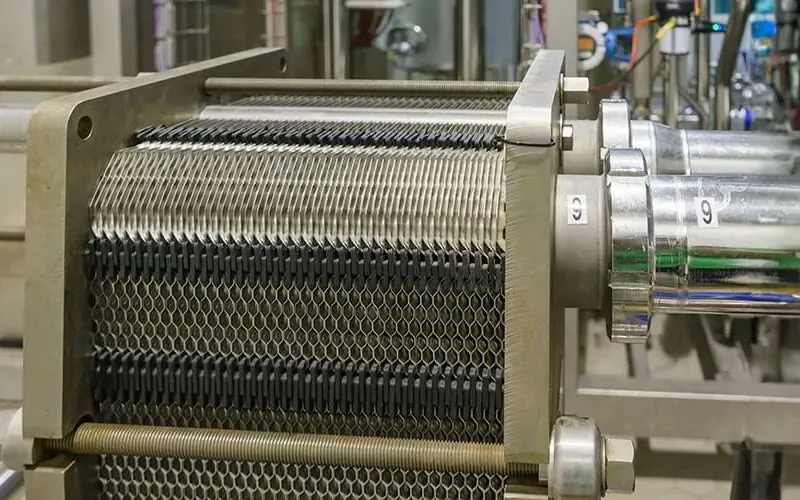
Look Up by Manufacturer & Model
Read the nameplate, identify the construction, and get a matched sanitary replacement.
+ Learn More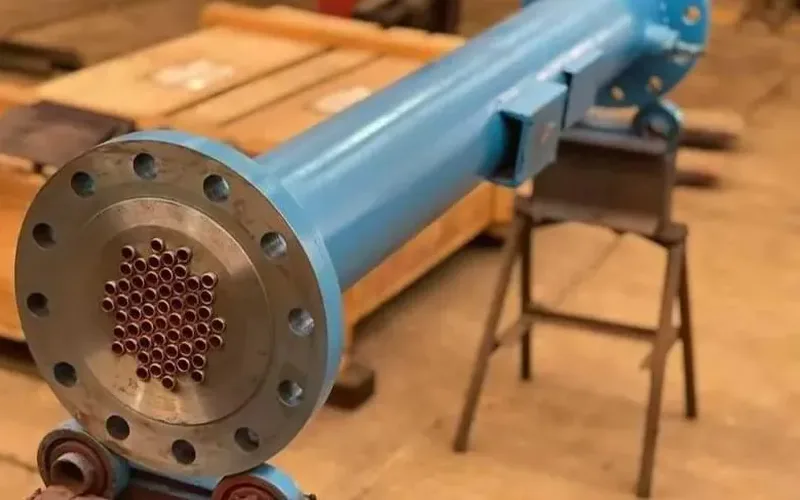
Sizing & Selection
Match by Dimensions & Connections
What to measure so the new unit lands on the same piping, the same feet and the same skid.
+ Learn More
Sizing & Selection
What to Send Us
The checklist that turns a replacement request into a priced, drawn, matched unit without a call back.
+ Learn More