
1-805-484-2992
Quotes - Engineering - SalesA wider channel for product with something in it
Standard chevron plates seal alternate channels at a gap of roughly a tenth of an inch, and the corrugations touch at hundreds of points to support the plate against pressure. Any solid larger than the gap lodges at those contact points, and fibers wrap around them. A wide-gap plate is pressed with a shallower pattern and fewer contact points so the product channel opens to roughly twice the standard gap, generally 0.2" to 0.5" depending on the pressing, while the utility channel on the other side stays narrow to keep its coefficient high.
That gives the compact frame, the close approach and the regeneration capability of a plate exchanger to products that have historically been sent to tubes: orange and other citrus juice with pulp, tomato juice, wort carrying trub, vegetable and fruit purees without large pieces, sauces with fine solids, and fibrous plant-based beverages.
The limit is real, though. Particulates above about 3/8", whole fruit pieces, seeds that bridge, and viscosity in the hundreds of centipoise push even a wide-gap plate into high pressure drop or plugging. Those duties belong on the tube-in-tube page, and the sizing conversation is honest about which side of that line a product falls.
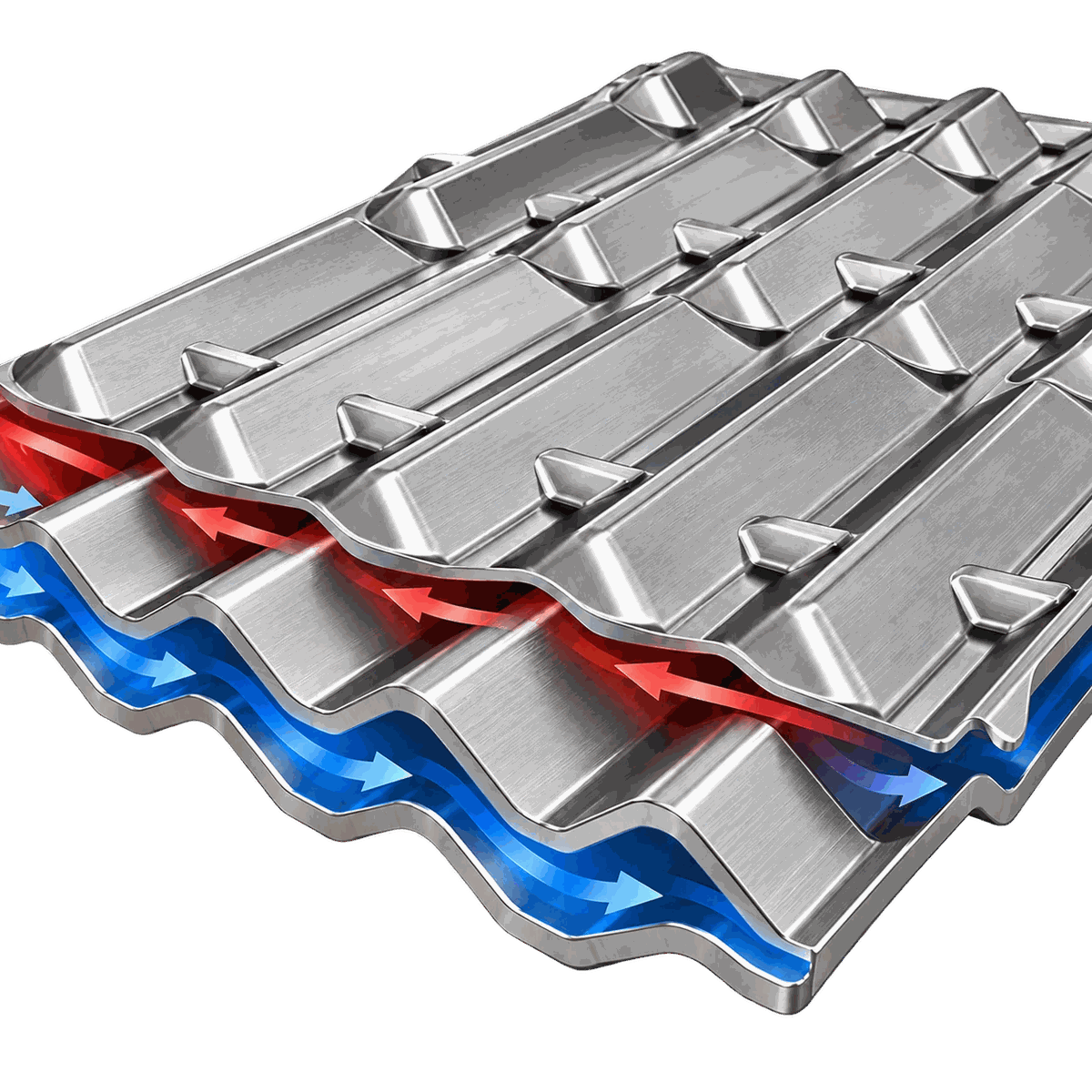
Pulp, trub and fine solids that would seize a chevron pack in a shift run through a wide-gap channel all season.
Roughly twice the gap, fewer contact points, and the same regeneration a pasteurizer needs.
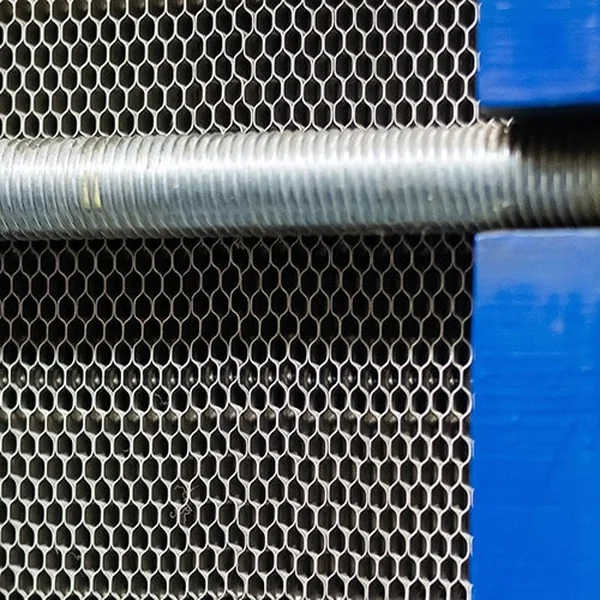
Open channels for pulp and trub
- Fewer contact points where solids can lodge
- Fibers and pulp pass without wrapping plates
- Soft particles up to roughly 3/8 inch pass
- Wort chillers run through a full brew day
- Rinse carries solids out during CIP
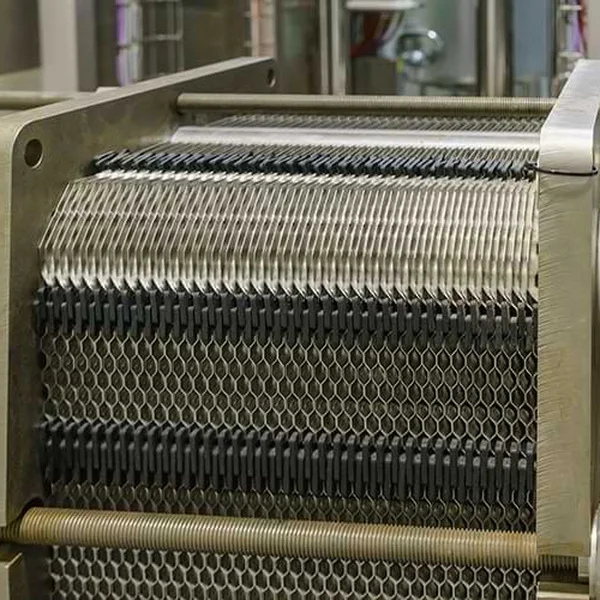
Plate economics for tougher product
- Narrow utility channel keeps its coefficient high
- Regeneration retained where tubes would give it up
- Ports sized a step up to avoid restriction
- Pressure drop checked at cold end viscosity
- 316L plates and EPDM gaskets for acidic juice
Choose It With




Wide-gap plate, typical sanitary build
These rows show how a wide-channel plate unit is normally built when product carries pieces or pulp. Particle size, viscosity and cleaning temperature from your own line decide where the build moves.
| Feature | Detail |
| Product channel gap | About 2x standard; generally 0.2" to 0.5" by pressing |
| Utility channel gap | Standard narrow chevron channel for high utility-side coefficient |
| Largest particle | Up to roughly 3/8" soft particulate; fibers and pulp pass freely |
| Viscosity range | Water-like up to a few hundred centipoise; above about 500 cP consider tube-in-tube |
| Plate material | 304L or 316L; 316L for citrus, tomato and acidified product |
| Gaskets | EPDM standard; nitrile for fatty product; food-grade compounds |
| Ports | Tri-clamp studded 2" to 6" typical, sized for the solids |
| Design pressure | 150 psig typical; wide-gap plates may carry a lower rating than chevron |
| Design temperature | Generally 250 F with EPDM; CIP at 160 to 180 F routine |
| Codes | 3-A plate exchanger standard, ASME U-stamp frame, PED, CRN as specified |
Applying wide-gap plates to sanitary duty
Juice, tomato and pulp
Citrus juice pasteurizers are the classic wide-gap application. Pulp content of a few percent by volume with cell fragments up to a few millimeters is exactly what the open channel is pressed for, and the plate frame still delivers 80 percent plus regeneration between raw and pasteurized juice. Tomato juice and thin purees run the same way. In every case the plates are 316L because of the acid, the gaskets are EPDM, and the port sizes are one size larger than a clear-juice unit of the same flow so the ports do not become the restriction.
Wort and brewery duty
Wort leaving the kettle carries trub and hop material even after the whirlpool, and a standard chevron wort chiller collects it at the contact points until the pressure drop climbs. Wide-gap plates on the wort side with a narrow channel on the glycol or water side keep the chiller open through a brew day and let the CIP rinse carry the solids out. The narrow utility channel matters here because the cooling water or glycol must reach a tight approach to hit the pitch temperature without excess flow.
- Wort side wide-gap, utility side standard chevron
- Trub and hop solids carried through, not collected
- Approach of a few degrees to pitch temperature
- Single-stage water or two-stage water then glycol
Sauces, purees and plant-based beverages
Sauces with fine solids, thin fruit and vegetable purees, oat and nut beverages carrying fiber, and similar products sit near the boundary between plates and tubes. Wide-gap plates handle them when viscosity at the cold end stays under a few hundred centipoise and the solids are soft and under about 3/8". The sizing checks the pressure drop at the cold-end viscosity, because a product that runs at 50 cP hot may be 400 cP at the chilled outlet, and the plate count and pattern are chosen for the worst case.
Knowing when to leave plates behind
The tell is pressure drop. When the wide-gap pack needs more than the pump can give at the cold end, when particles approach 3/8" or are hard rather than soft, or when the product is above roughly 500 cP, adding plates only spreads the problem. Tube-in-tube with a 1" to 2" product tube takes those products with margin and gives up regeneration, which is the actual trade being made. The right unit is chosen from viscosity, particle size and the value of the recovered heat, not from a preference for one construction.
Wide-gap plates extend plate-exchanger economics as far as they honestly reach. Call and talk it through with an engineer: 1-805-484-2992
Common FAQs
Soft particulates and pulp up to roughly 3/8" pass through the open channel. Hard particles, seeds that can bridge, and anything larger belong in tube-in-tube. The plate's port size is also checked so the ports are not the limit.
Per square foot, yes; the shallower pattern produces less turbulence than a chevron plate. The utility side stays narrow to recover some of that, and the pack is sized with more area. The overall unit is still far more compact than a tube exchanger for the same duty.
Yes. Product-to-product regeneration on both sides of a wide-gap plate is common on juice pasteurizers, at somewhat lower regeneration percentages than clear-liquid units because both channels are the open pattern.
It is designed for it. The open channel lets the CIP rinse carry pulp and trub out, and the reduced contact points leave fewer places for solids to lodge. Velocity in the wide channel during CIP is checked at sizing since the wider gap lowers it for a given flow.
Send a viscosity at the coldest process temperature, a particle description and the available pump head. The sizing shows the pressure drop on wide-gap plates against a tube-in-tube alternative so the choice is made on numbers.
Related

Sanitary Exchangers
Gasketed Plate
Chevron plates, food-grade gaskets and a frame you can open: the standard sanitary plate unit.
+ Learn More
Sanitary Exchangers
Double-Wall Plate
Two plates where one used to be, a vented gap between them, and no way for glycol to reach product.
+ Learn More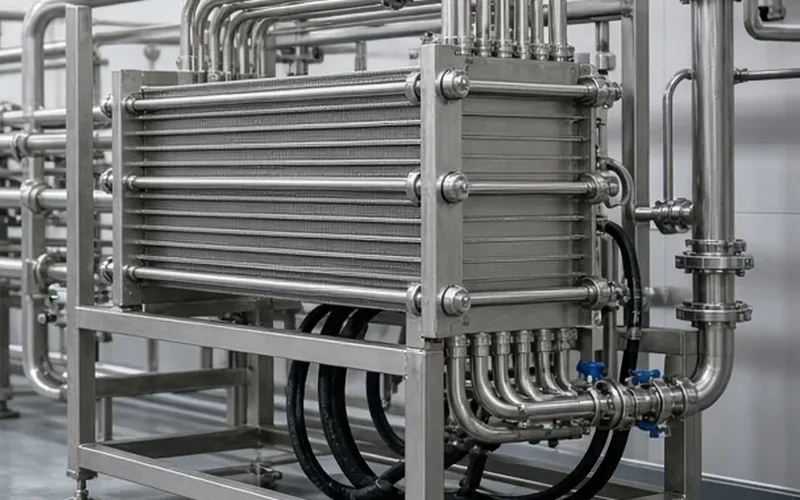
Sanitary Exchangers
Plate & Frame
Close approach, regeneration and a pack that opens for inspection: the pasteurizer's construction.
+ Learn More