
1-805-484-2992
Quotes - Engineering - SalesStart With the Nameplate
Every sanitary exchanger that has been on a floor for more than a few years carries a nameplate, a model code and, if the plant kept it, a data sheet. Between them they tell you the construction, the design pressures and temperatures, the code stamps and often the surface area, and that is nearly everything needed to supply a matched new unit. What they do not tell you is the duty the line runs today, which is why the nameplate goes on the sheet next to the current flow and temperatures rather than instead of them.
Below is what the common sanitary makes are usually seen as and what to read off each. Brand names are the trademarks of their owners and are used here for cross-reference only; specifications are matched from the nameplate and published data. HeatX supplies the sanitary replacement unit.
What to read off the nameplate
- Manufacturer, model or type code, and serial number
- Design pressure and design temperature, each side, and any MAWP or test pressure
- Code stamps: ASME U, National Board number, CRN, PED category, 3-A symbol
- Surface area if stated, and on plates the plate count and plate type
- Year of manufacture, which dates the gasket and plate generation
- Materials of construction, product side and utility side, and gasket compound
The mark the nameplate carriesAlongside the ASME U stamp, National Board number, CRN and PED category, the hygiene symbol on the old plate tells us which class the replacement must be built and documented to.
What the Model Code Usually Encodes
Plate unit codes generally carry a plate size or series designation, a frame size and often the plate count and the connection size. Shell-and-tube codes generally carry the shell diameter, the tube length and sometimes the tube count or the pass arrangement. Tube-in-tube codes generally carry the inner tube size, the number of inner tubes and the module length. None of it is standardized across makers, and the same maker changes its scheme between generations, so the code is a starting point and the physical dimensions are the confirmation.
A photograph of the nameplate and one of the whole unit with a tape measure across the connections resolves most of it in one pass.
- Gasketed plate: plate model, plate count, frame length, port size, gasket compound, max plates the frame holds
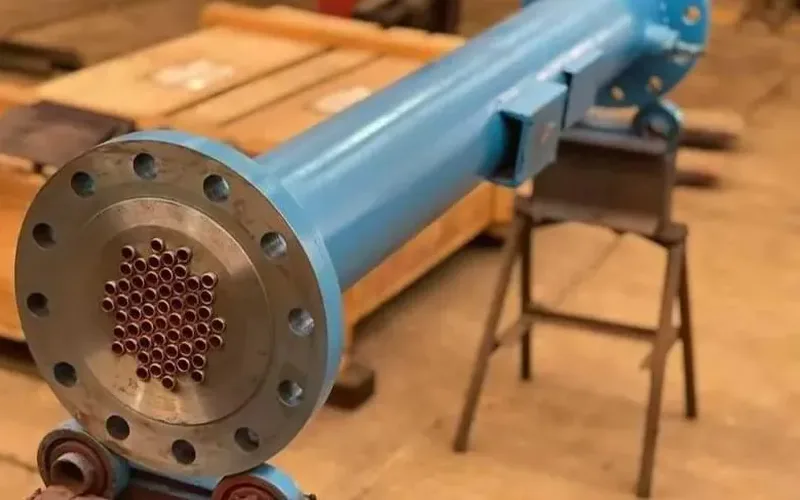
- Sanitary shell-and-tube: shell OD, tube OD and count, tube length, passes, tubesheet type, head style
- Tube-in-tube: inner tube OD and count, jacket OD, module length, number of modules, bend style
- Any unit: design pressure and temperature each side, and the hygiene marks it carried
- Missing plate: measure it, and see Match by Dimensions and Connections in this section
The nameplate gives the construction; only the line gives today's duty.
- Photograph the nameplate and the unit with a tape measure
- Read design pressure and temperature for each side
- Plates matched on area, count, port size and frame length
By Brand Family: What They Are Usually Seen As
Alfa Laval units on sanitary duty are most often gasketed plate-and-frame pasteurizers and coolers, in dairy, brewery and beverage plants, along with some sanitary shell-and-tube and tubular units. The nameplate on a plate frame typically gives the plate model, the number of plates, the frame size and the design pressure; the plate hanger or the plate itself carries the plate type. Note the gasket compound and whether the plates are glued or clip-on, because that dates the generation. The replacement is matched on plate area, plate count, port size and frame length, and on the duty the line now runs.
GEA units are seen as gasketed plate pasteurizers and regenerators in dairy and beverage, and as tubular units on viscous and particulate product, including some multi-tube and tube-in-tube designs. A plate frame nameplate gives plate type, plate count and design conditions; a tubular unit gives shell and tube dimensions and design pressures. Read both sides of the design conditions, because the utility side on a regenerator is product too and the ratings should be equal.
SPX Flow and APV units cover the full range: gasketed plate units in HTST and UHT lines, sanitary shell-and-tube, and tubular units on viscous product. Older APV plate frames are common in dairies and carry plate designations that the frame plate and hanger bars still identify. Match plate area and count, port size and frame length; on a tubular unit match shell OD, tube length, connection type and the tubesheet arrangement.
Enerquip units are sanitary and pharma shell-and-tube exchangers, straight-tube and U-tube, single and double tubesheet, with tri-clamp connections and polished tube sides, seen in pharma water systems, food plants and CIP skids. The nameplate gives the shell diameter, tube length, design pressures and code stamps; the drawing, if the plant has it, gives the tube count and passes. Match on shell OD, tube length, passes, connection sizes and whether the tubesheet is single or double.
Paul Mueller units are sanitary shell-and-tube exchangers, often on dairy, food and pharma water duty, and some plate units, along with tanks and process systems in which an exchanger is one component. The exchanger nameplate carries shell size, tube length and design ratings; if the exchanger is part of a larger system, the system drawing usually carries the duty. Match on the same tubular dimensions and on the 3-A or BPE class the unit was built to.
Chester-Jensen units are seen as sanitary plate and tubular exchangers in dairy and food plants, some of long service, and as components of pasteurizing systems. Nameplates give plate or tube dimensions and design ratings; on older units the plate type may be identified only by measurement. Match on plate area and count or on tubular dimensions, and confirm the connection type, which on older units may be bevel-seat rather than tri-clamp.
Tetra Pak units are plate and tubular exchangers within pasteurizing, UHT and aseptic systems, often supplied as part of a complete line. The exchanger's own nameplate carries the construction data; the line documentation carries the duty and the regeneration arrangement. Match the exchanger on its dimensions and connections and the line on its flow and temperatures, and say whether the replacement must fit an existing frame or skid. Tranter units are gasketed plate exchangers, seen in sanitary service on beverage, brewery and utility duties; match on plate area, plate count, port size and frame length. Allegheny Bradford units are sanitary and pharma shell-and-tube exchangers, single and double tubesheet, seen in WFI, purified water and point-of-use cooling; match on shell OD, tube length, connections and the tubesheet arrangement, and carry the BPE finish and documentation across.
Whatever the make, the procedure is the same: nameplate photo, connection sizes and overall length, the hygiene marks the plant is audited to, and the current flow and temperatures. The published data is used for what it states and gaps are flagged and confirmed by measurement rather than assumed. The replacement that comes back is a new sanitary unit built to the same envelope and connections, rated for the duty the line runs today, with the drawing for approval before fabrication. Call and talk it through with an engineer: 1-805-484-2992
The model code gets us started; the nameplate, a tape measure and the current duty finish the match.
Request a QuoteCommon FAQs
Yes. The list is the makes most often seen on sanitary duty, not a limit. Send the nameplate photo, the connection sizes and the duty and the match is made the same way.
It is a new HeatX-supplied sanitary unit built to fit the same envelope and connections and to meet the same or a higher hygiene class, rated for the current duty. Where the original had a shortfall or a weak point, the replacement corrects it.
Measure the unit. Shell OD, overall length, connection sizes and type, and mounting on a tubular unit; plate dimensions, plate count and frame length on a plate unit. The Match by Dimensions and Connections page lists exactly what to measure.
It helps to identify the plate area, but a measured plate, the plate count, the port size and the frame length are enough. The replacement is sized on the duty and matched to the frame envelope and ports.
Related
Sizing & Selection
Match by Dimensions & Connections
What to measure so the new unit lands on the same piping, the same feet and the same skid.
+ Learn More
Sizing & Selection
What to Send Us
The checklist that turns a replacement request into a priced, drawn, matched unit without a call back.
+ Learn More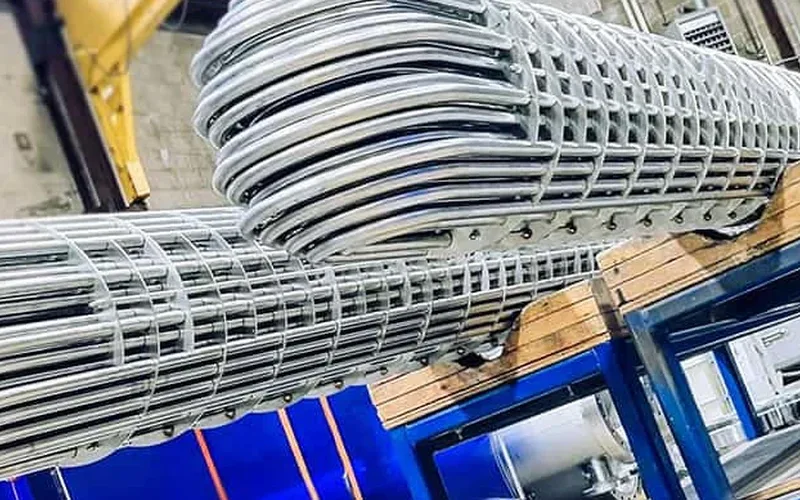
Sizing & Selection
Replace Your Exchanger
Look up the unit you have, match it by dimensions and connections, and send us the nameplate.
+ Learn More