
1-805-484-2992
Quotes - Engineering - SalesWhen the jacket and the vessel are the same piece of steel
An integral panel is a single-embossed plate whose flat face is the inside of the vessel. It is either welded into an opening in the shell, so the panel replaces that section of wall, or the shell itself is built from panels rolled to the vessel diameter and seam-welded together. Either way the product sees one smooth polished surface with the pillows on the outside, and the utility runs in the passages formed when the panel was inflated. There is no separate jacket, no annular space to fill and no second wall to hold the media.
The arrangement suits a tank that is being built or rebuilt: dairy vats and cheese vats, process tanks for sauces and juices, fermenters and brite tanks, cone bottoms that need heating to keep product moving, and pharmaceutical vessels where the product face has to meet an electropolish specification. It also covers rotating equipment. A chill roll or an inflated drum is an integral panel wrapped into a cylinder, with the product cooled or heated on the outside of the drum as it turns.
Compared with a conventional jacket or a dimple jacket, an integral panel carries far less media, comes to temperature faster, and holds the same rating on a thinner, lighter wall because the inflated pattern is a stiff structure in its own right.
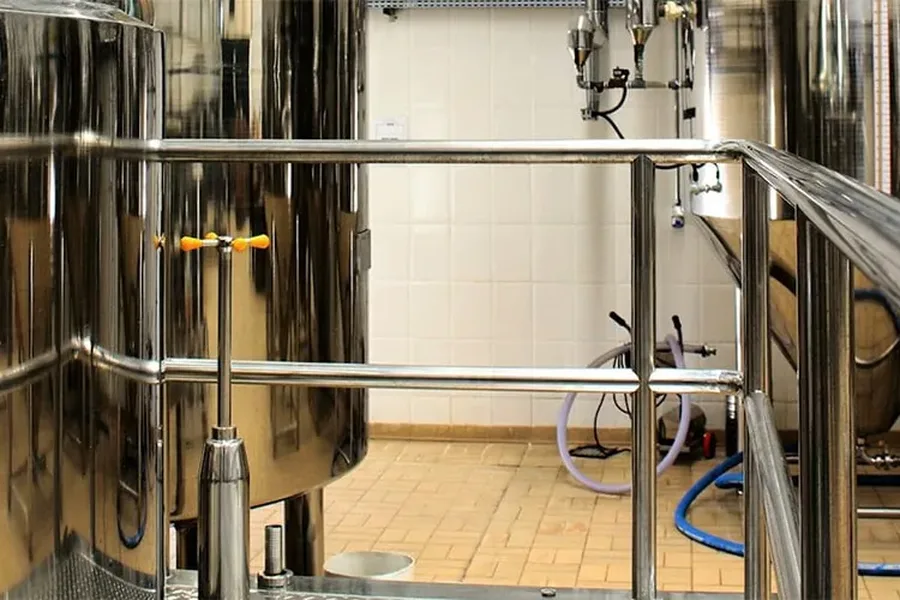
A dimple jacket holds gallons of glycol against the tank wall. An integral panel holds a cup or two per square foot, and it changes temperature as fast as the valve does.
Low media volume is what makes an integral jacket controllable.
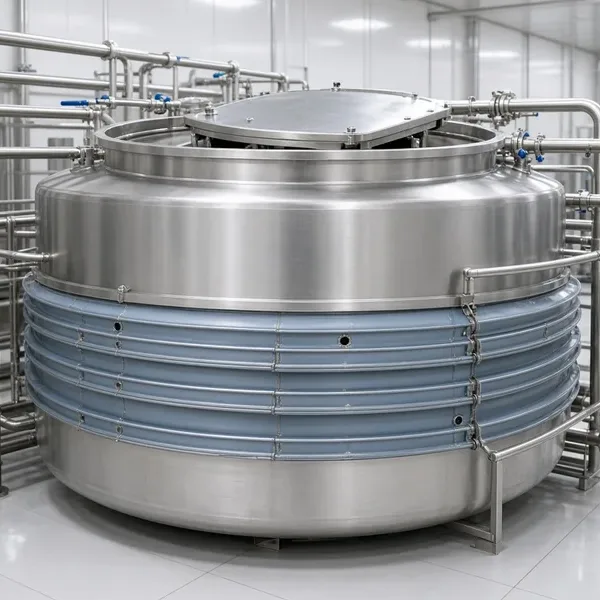
A jacket with almost no media
- Holds cups of media per square foot, not gallons
- Changes temperature as fast as the valve moves
- Tighter control loop on a fast jacket
- Thinner lighter wall holds the same rating
- Pillows outside, one smooth polished face inside
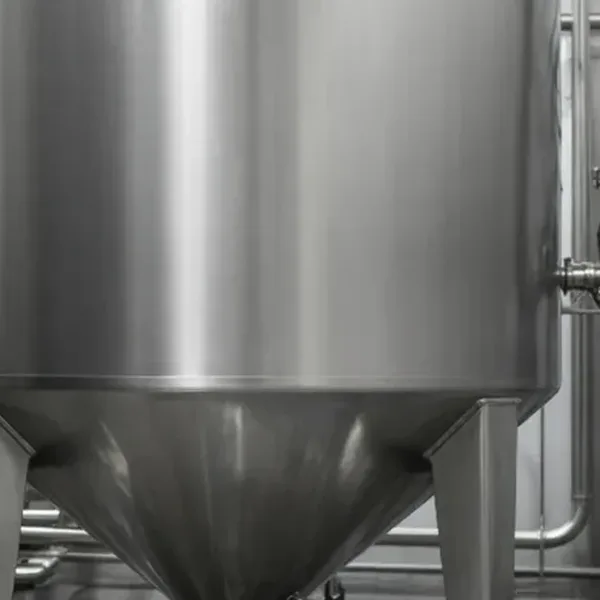
Zoned for partial batches
- Cone, lower and upper sidewall run separately
- No scorching on dry wall above the liquid
- Cone zone keeps viscous product draining
- Steam zones trapped, glycol zones vented, shown on drawing
- Nozzle cutouts carry the full jacket rating
Built To



Integral panels, typical build
Panel type, product face, zoning and rating are listed as the build normally quoted for a welded jacket. Where your vessel or media differs, say so in the quote request and the build follows.
| Feature | Detail |
| Panel type | Single-embossed; flat face is the product surface, pillows outward |
| Installation | Welded into a shell opening, or panels rolled and seamed to form the shell |
| Product-face material | 316L standard on sanitary duty; 304L where chlorides are absent |
| Product-face finish | 32 Ra or 20 Ra polished; electropolished for pharma and biotech |
| Zoning | Sidewall, cone and bottom zones piped separately for partial batches |
| Utility media | Steam, hot water, chilled water, propylene glycol, ammonia or CO2 DX |
| Jacket rating | Engineered per gauge and pattern; 100 to 150 psig and 300 F+ typical |
| Vessel codes | ASME U-stamp on the jacket and vessel as required; 3-A, PED, CRN |
| Drums and rolls | Panel wrapped to a cylinder on a shaft with rotary unions for the utility |
| Insulation | Cladding over the pillowed side with the jacket connections brought through |
Designing a vessel around an integral panel
The product face and what it demands
Because the flat face of the panel is a sanitary contact surface, the panel is polished after inflation, not before, so the finish is not disturbed by forming. Weld seams where panels meet inside the shell are ground flush and polished to the same Ra as the sheet, and the transition from panel to unjacketed shell is blended so there is no ledge. On pharmaceutical vessels the whole interior is electropolished as one surface and the finish is measured and recorded. Nozzles, manways and spray balls are located outside the panel area where they can be, or the panel is cut out around them and the weld pattern re-run to hold the rating at the cutout. That last point is why the nozzle schedule is needed early: it decides the panel layout.
Zones, partial batches and cone bottoms
A jacketed tank rarely runs full every time, and a jacket that heats the whole wall for a quarter batch scorches the product on the dry wall above the liquid. Integral panels are laid out in zones with separate inlets and outlets so the cone, the lower sidewall and the upper sidewall can be run alone or together. On a cone bottom the panel follows the cone and is often the single most useful zone in the tank, keeping viscous product warm enough to drain and preventing the cold plug that stops a pump. Steam zones are trapped at their low point and glycol zones are vented at their high point, and the piping is shown on the drawing so the installer does not have to guess.
- Separate cone, lower and upper sidewall zones
- Each zone trapped or vented for its medium
- Cone zone sized for drain-down heating
- Cutouts around nozzles carry the full rating
Chill rolls and inflated drums
A drum is an integral panel bent into a cylinder and welded to end heads on a shaft. Product is applied to the outside as a sheet or film, cooled or heated as the drum turns, and scraped or peeled off. That is how flaked, cast and sheet products are made: chocolate and confectionery, gelatin, dried fruit leather, some pet food and pharmaceutical film. The inflated passages give an even surface temperature around the circumference because the utility is spread over the whole drum rather than following a coil, and the utility is fed through rotary unions on the shaft. Surface finish on a drum is specified to the release properties of the product as well as to hygiene, and the drum is balanced after fabrication.
Utility choice and control
With a small media volume the jacket responds to the control valve quickly, and that changes how the loop is tuned. Steam gives the highest heat flux and the smallest jacket but the hottest wall, so on protein or sugar product it is often throttled or replaced by hot water in a closed loop with a steam injector. Chilled water and glycol are the usual cooling media on food and beverage tanks. Ammonia or CO2 direct expansion is run on fermenters, brite tanks and dairy silos where a refrigeration plant is already in the building, and the panel is rated and stamped for the refrigerant. In each case the sizing starts from the batch, the temperature change and the time allowed, and the panel area, zone layout and utility temperature are chosen together.
An integral panel is decided when the vessel is decided, and the earlier it enters the drawing the better the tank comes out. Call and talk it through with an engineer: 1-805-484-2992
Common FAQs
Only by cutting out a section of shell and welding the panel in, which means recertifying the vessel. For a tank in service the clamp-on or immersion arrangement on the Immersion page is usually the better answer; an integral panel is for a tank being built or rebuilt.
Yes when specified. The flat face is polished to the required Ra, the seams are ground and polished flush, and the vessel is built and documented to the applicable 3-A standard. Electropolish is added for pharmaceutical and biotech vessels.
It is set by the jacket rating and the vessel diameter, commonly 12 to 7 gauge on tank duty. Heavier gauge raises the pressure rating and adds stiffness on large panels; the choice is made on the drawing rather than from a catalog.
Yes, and it is common on tanks that cook and then cool. Each zone has its own connections, and the piping is arranged so a zone is drained and vented before the other medium is admitted. Cross-connected zones are avoided.
The drum surface finish is chosen for release as much as for hygiene, and a scraper or doctor blade is fitted. The even surface temperature of an inflated drum helps because a warm streak is where sticky product refuses to let go.
Related
Sanitary Exchangers
Immersion
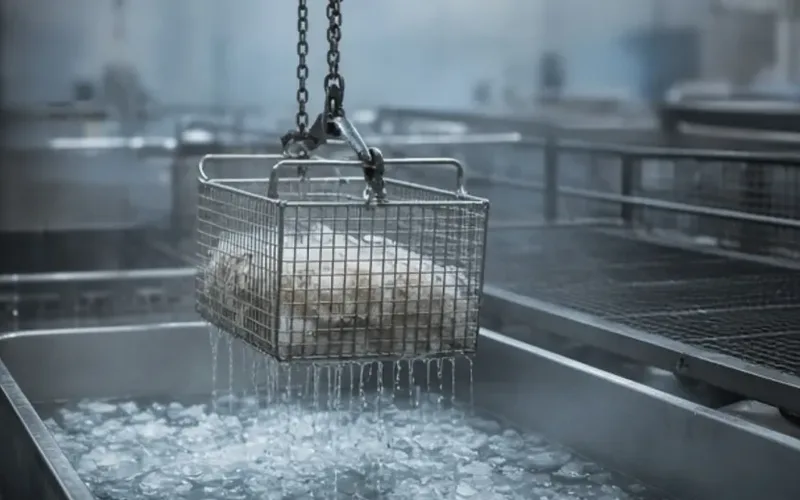
Hang it in the tank, clamp it to the wall or bank it in a trough: heat transfer added to a vessel you already own.
+ Learn More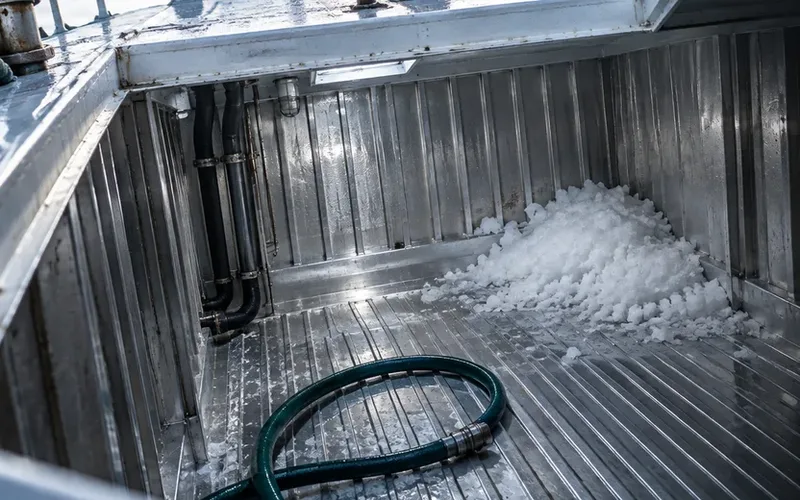
Sanitary Exchangers
Custom
Any shape the sheet can be cut to, any alloy that can be welded, and a drawing before a price.
+ Learn More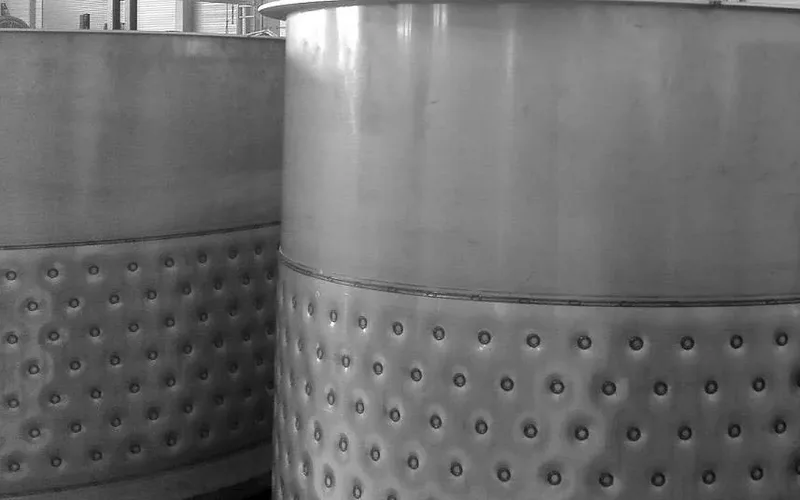
Sanitary Exchangers
Embossed Plate
Two stainless sheets welded and inflated into a heat transfer surface that goes wherever the tank needs it.
+ Learn More