
1-805-484-2992
Quotes - Engineering - SalesTaking water out without taking the product with it
A sanitary evaporator is a shell and tube calandria with the product boiling inside polished tubes and steam, or vapor from a previous effect, condensing on the shell. The vapor leaving the tubes is separated from the concentrated liquid in a vessel above or beside the calandria, and that vapor goes on to a condenser or to the next effect. The product is concentrated in a single pass or in recirculation, depending on the type, and leaves at a higher solids content and, under vacuum, at a temperature low enough that flavor and protein survive.
Three calandria types cover sanitary duty. Falling film runs thin product down the inside of long vertical tubes for the shortest residence time and the lowest temperature, and is the standard for milk, whey and clear juice. Rising film boils product upward through shorter tubes and suits products that tolerate a little more time at temperature. Forced circulation pumps product through the tubes at high velocity and flashes it in the separator, which is how viscous, fouling or crystallizing concentrates are handled.
The calandria itself is the sanitary exchanger part of the system: 304L or 316L tubes, 32 Ra or better inside, seal welded to polished tubesheets, with spray balls, sight glasses and drains where CIP needs them.
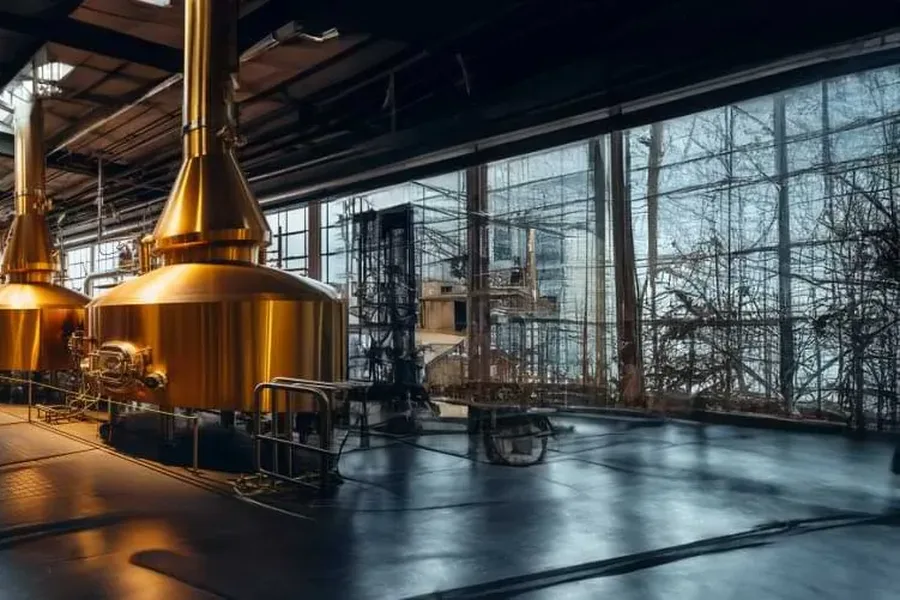
Under 27 inches of vacuum, milk boils at 115 F. That is the number that makes concentration possible without cooking the product.
Sanitary evaporators trade pressure for temperature so flavor and protein survive.
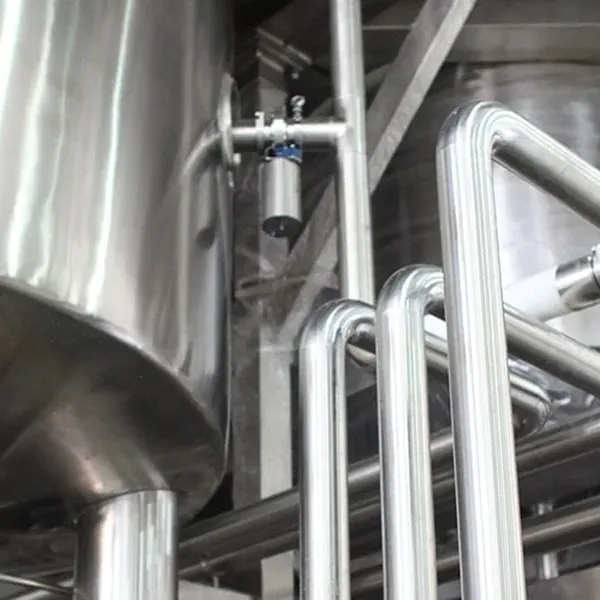
Concentrate without cooking
- Vacuum lowers boiling point to protect protein and flavor
- Falling film residence time measured in seconds
- Thin film never far above its boiling point
- Feed distribution sized for the real flow range
- Level and flow instruments guard against dry tubes
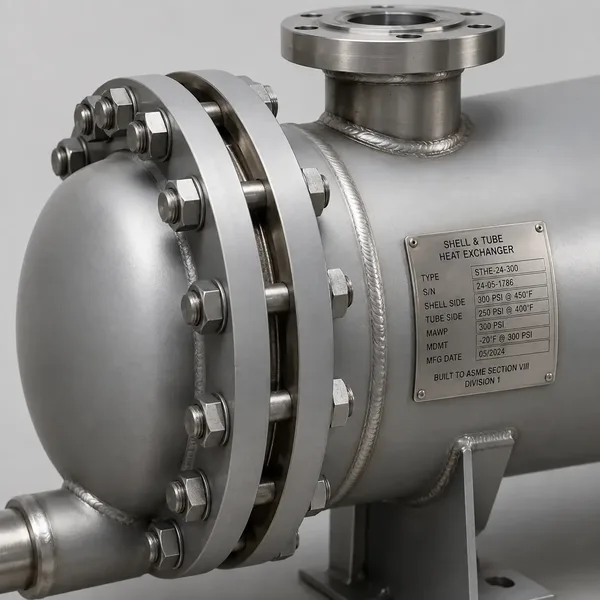
Handles fouling and viscous product
- Forced circulation copes with crystallizing concentrates
- High tube velocity stops deposits settling
- Added effects cut steam use per pound evaporated
- Spray balls reach top tubesheet and separator walls
- Low-point sanitary valves drain tubes after rinse
Spec Highlights




Sanitary evaporator calandria, typical build
This is the typical calandria build for a sanitary evaporator, from tube count to instrument connections. Check it against your concentration duty and send the product, feed rate and solids target when you request a quote.
| Feature | Detail |
| Type | Falling film, rising film or forced circulation |
| Tubes | 1" to 2" OD, 304L or 316L, 32 Ra or better inside, seal welded |
| Tube length | Falling film 20 to 40 ft typical; rising film and forced circulation shorter |
| Product temperature | Generally 105 to 160 F under vacuum for heat-sensitive product |
| Operating vacuum | Commonly 20 to 28 in Hg on food and dairy effects |
| Heating medium | Plant steam to 150 psig, or vapor from the previous effect |
| Effects | Single effect for small duties; two to five effects for energy economy |
| Separator | Vertical vessel with tangential inlet or mesh pad, polished, spray ball fitted |
| Instrument connections | Level, sight glass, vacuum breaker, sample and spray ball nozzles, tri-clamp |
| Codes | ASME VIII Div 1 U-stamp with external pressure, 3-A conformance, PED, CRN |
Selecting and running a sanitary evaporator
Falling film for milk, whey and clear juice
Product is distributed at the top tubesheet so it wets every tube evenly and runs down as a thin film, boiling as it goes; residence time is seconds and the film never sees more than a few degrees above its boiling point. Distribution is the critical detail: a tube that runs dry scales in minutes, so the distributor plate is designed for the actual flow range and the calandria carries level and flow instrumentation to protect it. Falling film is the standard for skim and whole milk, whey, permeate, clear fruit juice and plant extracts at low solids.
Forced circulation for viscous and fouling concentrates
When the product thickens as it concentrates, or when it fouls, crystallizes or foams, the film types run into trouble at the high-solids end. A forced circulation calandria pumps the product through the tubes at 6 to 10 ft/s with enough head that it does not boil in the tube; it flashes in the separator instead. Tube velocity keeps deposits from settling and gives a coefficient independent of the product's viscosity. Tomato paste, fruit purees, sugar solutions near saturation, yeast extract and the last effect of a multi-effect dairy train are the usual forced circulation duties.
- Suppressed boiling in the tube, flash in the separator
- 6 to 10 ft/s tube velocity
- Coefficient largely independent of viscosity
- Tolerates fouling and crystallization
Effects, vapor reuse and the condenser
A single-effect evaporator uses about 1.1 lb of steam per pound of water evaporated. Each added effect reuses the previous effect's vapor as heating medium, so a triple-effect train needs roughly a third of that steam. The trade is capital for energy and is decided by the plant's steam cost and hours of operation. Whatever the number of effects, the last vapor goes to a sanitary vapor condenser against tower or chilled water, and a vacuum pump or ejector removes non-condensables. Thermal or mechanical vapor recompression can replace effects where power is cheap and steam is dear. The condenser on the last effect is covered on our evaporator condenser pages.
Cleaning and drainability
The calandria and separator are cleaned in place by flooding the tubes and spraying the vapor space. Spray balls are positioned to reach the top tubesheet, the distributor and the separator walls; CIP is run at 160 to 180 F with caustic and acid, and the tubes are then rinsed and drained through low-point sanitary valves. The falling film distributor is designed so it drains and so its holes can be verified clean; forced circulation loops carry a drain at the pump suction. Every internal surface above the liquid line is polished because product vapor condenses on it.
An evaporator sized for the actual solids curve and the plant's steam economics is a long-lived, predictable piece of equipment. Call and talk it through with an engineer: 1-805-484-2992
Common FAQs
Falling film for thin, heat-sensitive product at low to moderate solids: milk, whey, clear juice, extracts. Forced circulation for viscous, fouling or crystallizing product and for the last effect where solids are high. Rising film for products that tolerate a little more time at temperature and where tube length is limited.
About 1.1 lb of steam per lb of water evaporated in a single effect. Two effects cut that roughly in half, three to about a third. The quote shows steam consumption for each option so the payback on added effects is visible.
Under 27 to 28 in Hg vacuum, water boils near 105 to 115 F, and the last effect of a dairy or juice train runs in that range. Earlier effects run hotter because their vapor must heat the next effect. Very heat-sensitive extracts can be run at the low end throughout with a mechanical vapor recompressor.
Yes. Spray balls in the separator and above the tubesheet, flooded tubes and low-point drains are designed in so the complete circuit is cleaned in place. The calandria heads and separator manway are still tri-clamped for inspection.
The calandria, separator and connections are built to 3-A sanitary practice with polished product surfaces, seal-welded tubes and drainable design. Pharma extract evaporators follow ASME BPE in 316L with electropolish where specified.
Feed rate, feed solids and target solids, product type with its boiling point rise if known, allowable product temperature, steam pressure available, cooling water temperature and the hours of operation per year. From that the number of effects, calandria type and area are set.
Related
Sanitary Exchangers
Vapor Condensers
Vapor in, liquid out, and the non-condensables sent somewhere they cannot blanket the tubes.
+ Learn More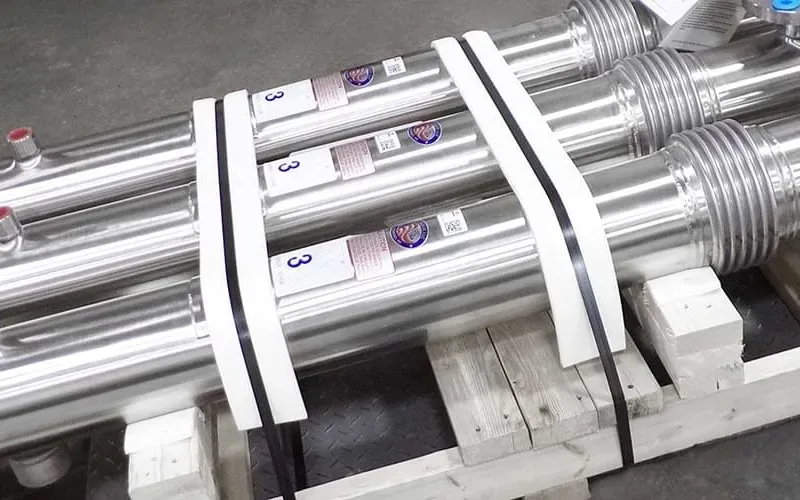
Sanitary Exchangers
Clean Steam Generators
Plant steam in the tubes, treated water in the shell, and steam clean enough to touch product out the top.
+ Learn More
Sanitary Exchangers
Evaporators & Condensers
Phase change with a sanitary surface: concentrating product, condensing vapor and raising clean steam.
+ Learn More