
1-805-484-2992
Quotes - Engineering - SalesHeating before the culture, cooling after it
Cultured dairy has two thermal jobs and they could not be more different. Before the culture goes in, yogurt mix is fortified, homogenized and heated to 185 to 195 F, held for 5 to 10 minutes to denature whey protein for body, then cooled to a culture temperature of 108 to 113 F. That is a thin, milk-like fluid and the exchanger is an ordinary plate pasteurizer with a long hold and a cooler that stops precisely at 110 F. After the culture has set, stirred yogurt and cultured buttermilk are broken, pumped and cooled from 110 F to 40 F, and now the product is a shear-sensitive gel at 1,000 to 5,000 cP that a plate pack would turn to soup.
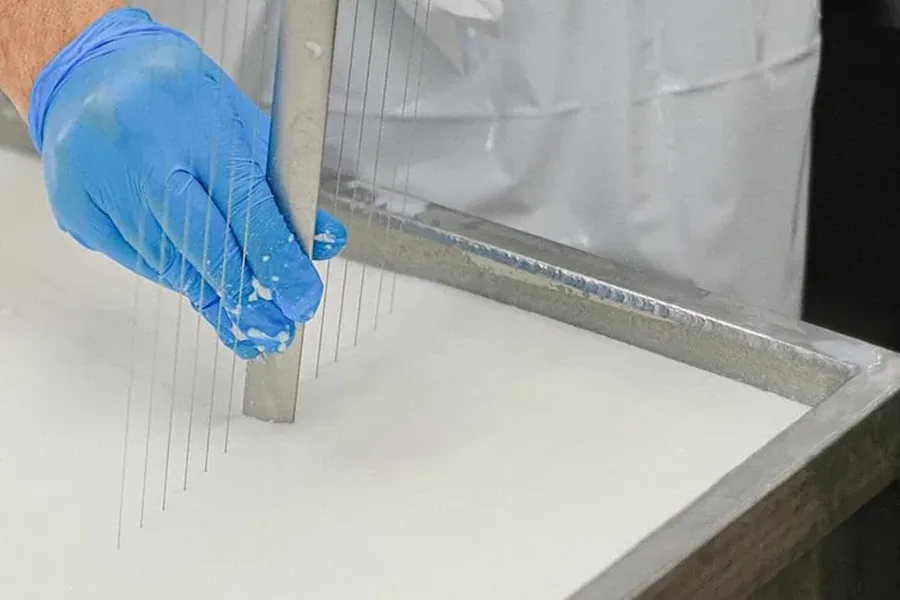
Cheese has its own set: cheese milk warmed to 88 to 90 F for the vat, cooked whey drawn off at 100 to 105 F and cooled for storage or heated to 165 to 185 F for protein recovery, curd wash water warmed to 90 to 100 F, and cream cheese or process cheese cooled after cooking. None of these are difficult individually; the mistake is buying one exchanger for the vat loop and asking it to do the whey heating as well.
Request a Quote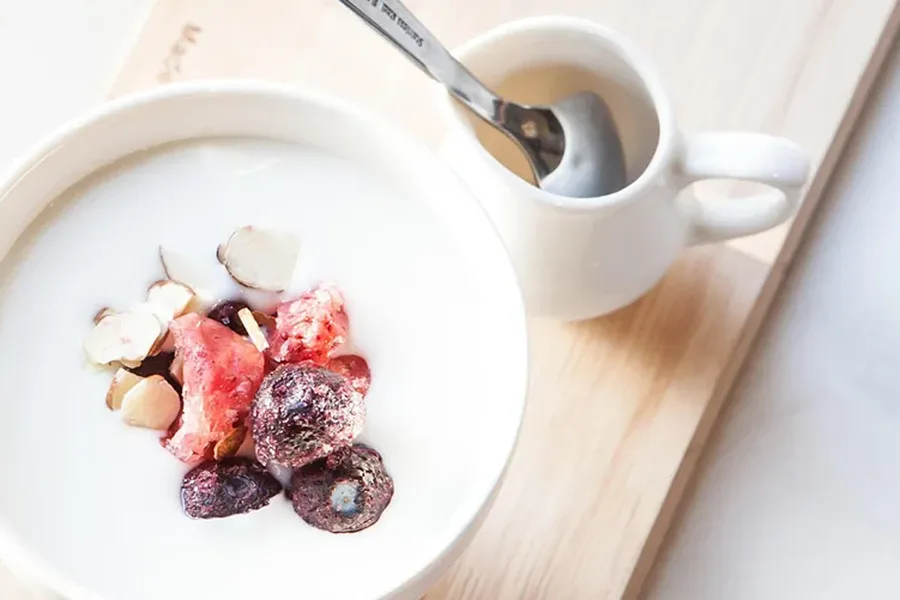
Low shear keeps stirred yogurt within 10 percent of its set viscosity
Broken gel at 1,000 to 5,000 cP goes through a 1-1/2 to 2 inch bore at under 2 ft/s and under 15 psi. On the mix side the fight is fouling: 14 to 16 percent solids at 190°F calls for 20 to 30 percent more area.
Yogurt mix heater and culture cooler
- 185 to 195 F with a 5 to 10 minute hold coil
- Cooling stopped at 108 to 113 F, within 1 degree, on tempered water
- Regeneration section recovers 70 to 85 percent
- Fortified mix at 14 to 16 percent solids fouls faster than milk
- 3-A plates, 316L, EPDM gaskets
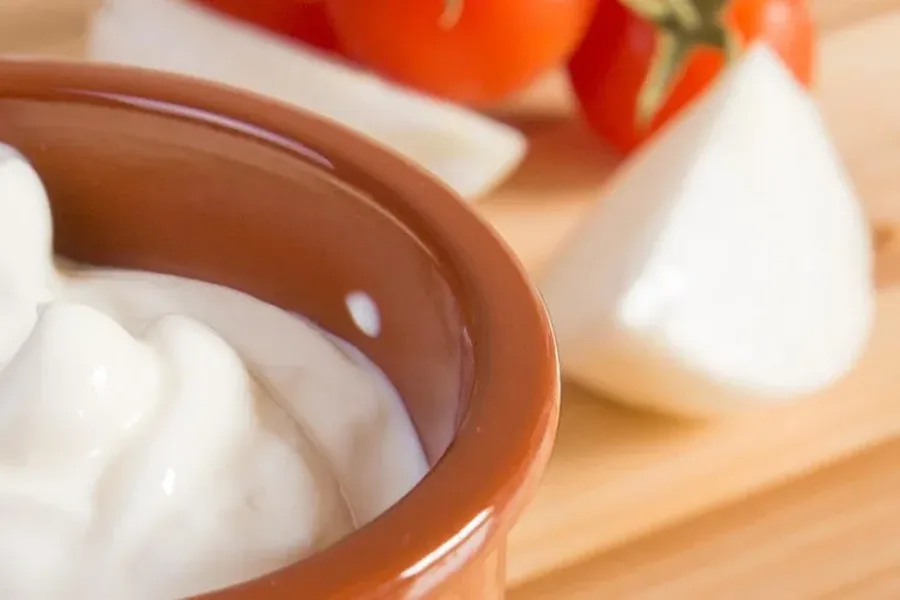
Post-culture and cheese exchangers
- Tube-in-tube with 1-1/2 to 2 inch product bore for set product
- Velocity under 2 ft/s, pressure drop under 15 psi
- Cheese milk warmer on hot water at 88 to 90 F
- Whey heater to 185 F for protein recovery on plates or tubes
- Curd wash water and vat jacket hot water sets on steam
Recommended construction by cultured and cheese duty
The break between thin and cultured product is the line that decides plate versus tube. Everything else follows the utility.
| DUTY / CONDITION | RECOMMENDED CONSTRUCTION | WHY |
| Yogurt mix heating and holding, 185 to 195 F, 14 to 16 percent solids | Gasketed Plate | Thin fluid, regenerates well; fortified mix fouls faster so the heating section carries extra area |
| Cooling stirred yogurt or cultured buttermilk after the break | Single Tube-in-Tube | Large bore, low shear, gel passes without breaking down; cooled on glycol jacket at low velocity |
| Drinkable yogurt and kefir cooling | Corrugated Tube | Thinner than stirred yogurt but still cultured; corrugation gives the coefficient without a narrow channel |
| Fruit prep and yogurt with fruit pieces up to 1/2 inch | Multi-Tube | Pieces pass in parallel tubes sized above the largest particle; no gaskets in the product path |
| Cheese milk warming to 88 to 90 F, vat fill | Wide-Gap Plate | Raw cheese milk with occasional fat and fines runs cleaner through a wide gap; tight temperature control on tempered water |
| Whey heating to 165 to 185 F for protein recovery; vat hot water sets | U-Tube | Steam on tube side for the hot water loop; fines and mineral scale on the shell side are brushed from a removable bundle |
Designing around the gel
Set yogurt is never pumped after incubation, so the exchanger sees only the mix. Stirred yogurt is broken at the end of incubation and pumped through a cooler to 40 F before fruit and filling, and the quality of the finished cup depends on how gently that cooler treats the gel. Every pass through a pump, a valve or a narrow heat transfer channel breaks down the protein network and the yogurt gets thinner and more prone to syneresis, the whey pooling on top. A tube-in-tube with a 1-1/2 to 2 inch product bore, velocity under 2 ft/s and a total pressure drop under 15 psi keeps the shear low enough that viscosity at the filler is within 10 percent of viscosity at the incubator.
On the mix side the difficulty is fouling, not shear. Yogurt mix is fortified with milk powder or ultrafiltered milk to 14 to 16 percent solids, and at 190 F with a 5 to 10 minute hold it deposits protein faster than fluid milk. The heating section carries 20 to 30 percent more area than a milk pasteurizer at the same flow, the hot water approach is held to 5 degrees, and the plant plans a mid-shift CIP if it runs more than one mix a day.
Cheese exchangers are gentler duties, but cheese milk at 88 to 90 F is close to the vat setpoint, so the warmer is controlled on tempered water within a degree and sized with enough area that a 5 degree utility swing does not move the vat. Whey heated to 165 to 185 F for whey protein recovery or for ricotta scales quickly, and that heater is the one unit in the cheese room that should be brushable: a straight-tube or U-tube unit with a removable bundle.
Shear is the number that ruins a cultured product
The culture-temperature cooler
Cooling mix from 190 F to 110 F and stopping there is a control problem more than a heat transfer one. The cooler runs on tempered water at 95 to 100 F rather than chilled water, so a 3 degree utility swing cannot chill the mix below the culture's working range. A plate section with a small approach and a three-way tempering valve on the water holds 110 F within a degree at steady state and does not overshoot on start-up.
Fruit and particulates
Yogurt with fruit pieces, granola or cereal inclusions goes through a multi-tube or single tube-in-tube with the bore chosen above the largest particle by a factor of two. Pieces up to 1/2 inch run in a 1-1/2 inch tube; anything larger is dosed after the cooler rather than through it. Fruit prep itself is cooked and cooled in a tube-in-tube at 1 to 2 ft/s because the sugar syrup scorches on a hot plate wall.
The cheese room hot water loop
Cheese vats, curd wash water, whey heating and CIP supply in a cheese plant all draw hot water off one loop fed by a steam-to-water U-tube set. Size that set on the peak coincident demand, which is usually vat heat-up plus wash water at the same time, and give it a 20 percent margin so a second vat can be added later without a second exchanger.
Quote checklist
For yogurt: mix solids, flow, heat and hold, culture setpoint, and whether the product is set, stirred or drinkable. For cheese: vat size and cycle, cheese milk flow, whey flow and destination, and the steam pressure at the hot water set. Those numbers turn into a firm price in one call. Call and talk it through with an engineer: 1-805-484-2992
Common FAQs
Shear. A plate cooler or a small tube at 4 to 5 ft/s breaks the gel. Replace it with a tube-in-tube of 1-1/2 inch or larger bore, cut the velocity below 2 ft/s, and keep the pressure drop under 15 psi; the viscosity comes back.
The mix side yes, the cultured product no. Heat and cool the mix on the plate unit, then use a separate low-shear tubular cooler after incubation. Trying to do both on plates costs body in the finished cup.
108 to 113 F for standard yogurt cultures, held within about a degree. Some thermophilic cultures run 104 to 108 F and some mesophilic products such as sour cream and buttermilk set at 70 to 75 F. HeatX sizes the cooler and tempered water loop to the setpoint you specify.
A brushable straight-tube or U-tube heater with a small steam-side approach, an acid CIP step every cycle, and cooling the whey below 160 F in storage before it is reheated. Scaling drops to weeks.
Related
Applications
HTST Pasteurization
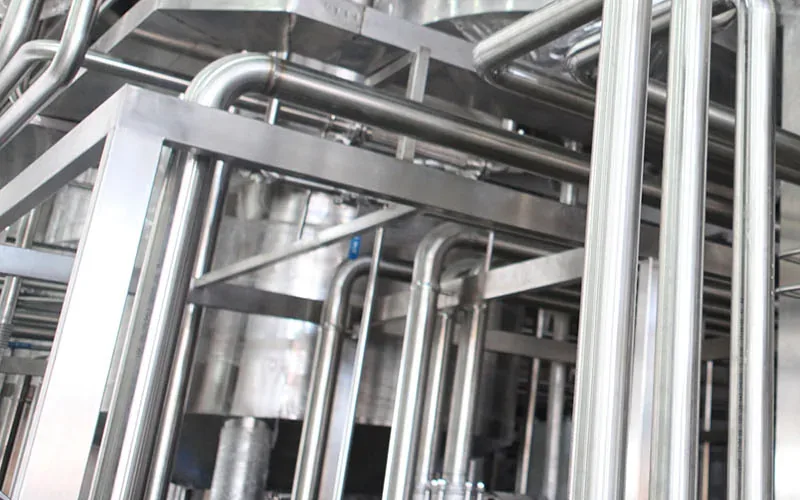
Regeneration, heating, holding and cooling in one frame, sized so every particle sees 161 F for 15 seconds.
+ Learn More
Applications
UHT & ESL
Indirect sterilizers for 275 to 285 F and ESL heaters for 250 to 260 F, built to run a shift between CIPs.
+ Learn More
Applications
Milk, Cream & Whey
Raw milk to 38 F in one pass, cream heated without channeling, whey cooled without scaling.
+ Learn More