
1-805-484-2992
Quotes - Engineering - SalesHow a sanitary unit is built
Four decisions set the price and the inspection result
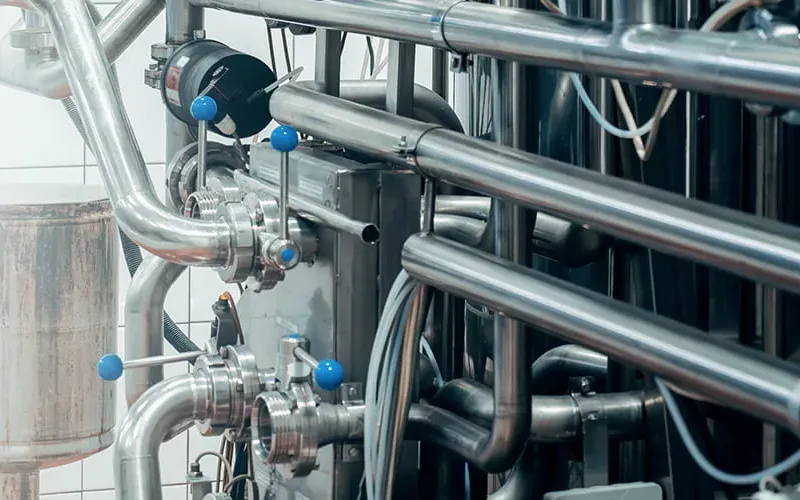
A sanitary heat exchanger is a pressure vessel with a second job: every product-contact surface has to clean in place, drain by gravity, and hold a documented finish for the life of the unit. The thermal design is the same arithmetic used on any exchanger. What changes is the list of construction rules layered on top of it, and each rule has a cost. Deciding which rules apply, before the drawing is started, is where most of the money on a sanitary order is won or lost.
This section walks through those rules in the order they come up on a real order: which standard the unit is declared to (3-A, ASME BPE, or plain food-grade drainable), how the product-contact side is detailed (finish, double tubesheet, connections, CIP and SIP), what metal and elastomer the wetted parts are made from, and which pressure-vessel codes and marks go on the nameplate. Read the four pages below in that order and you will be able to write a specification that a fabricator can price without a round of questions.
Sanitary Standards: 3-A, ASME BPE and food-grade drainable are three different levels of scrutiny, not three names for one thing. Which one a unit is built to decides the finish, the fittings, the paperwork and roughly a third of the cost.
Product-Contact Design: Surface finish and electropolish, double tubesheets, tri-clamp and other connections, slope and drain ports, and what a CIP or SIP cycle does to the metal and the gaskets over five years.
Materials: 304L against 316L, when chlorides push you to duplex or AL-6XN, which elastomer survives caustic CIP and which survives steam, and the certificates that prove what was actually welded in.
Codes & Certification: ASME Section VIII U-stamp and National Board registration, CRN for each Canadian province, PED categories for Europe, TEMA classes, and where the 3-A symbol legitimately goes.
What We Build To


What a good sanitary specification contains
The specifications that price fastest and build right are short and specific. They name one governing sanitary standard, one code stamp, the product-contact material by grade, the finish as a maximum Ra with a measurement method, the connection standard and size, and whether a double tubesheet is required. Everything else (baffle spacing, pass count, tube gauge) can be left to the thermal design.
- Governing sanitary standard: 3-A, ASME BPE, or food-grade drainable
- Pressure code: ASME Section VIII Div. 1 with U-stamp, plus CRN or PED if the unit ships abroad
- Product-contact material: 304L, 316L, or a named higher alloy
- Finish: maximum Ra on product side, separate Ra on utility side, electropolish yes or no
- Connections: tri-clamp, I-line, bevel seat, DIN or SMS, with sizes
- Double tubesheet: required, optional, or not needed
- CIP chemistry and SIP temperature the unit will see
The mistakes that show up at inspection
Almost every sanitary unit that fails an audit fails on something that was never on the drawing. A utility-side connection that cannot be drained. A tube-to-tubesheet weld that was not ground flush on the product side. A gasket compound chosen for temperature but not for the acid step of the CIP. A nameplate that says 3-A on a unit that was never registered. None of these are expensive to get right the first time, and all of them are expensive to correct after the unit is on its saddles.
The fix is the same in every case: put it on the drawing. A specification that names the slope, the finish on each surface, the tubesheet arrangement, the gasket compound and the marks on the nameplate leaves the shop nothing to assume and the inspector nothing to find.
- Unspecified slope: the unit is set level and holds a pool at the low tube
- Mechanical polish only where an electropolish was expected by the QA group
- Single tubesheet on a duty where the utility is not potable and the product is injectable
- Ferrules welded on without a purge, leaving heat tint the CIP cannot remove
- Missing MTRs for the one heat of tube that went into the bundle
- A vent that is the right size but points sideways
Related
Design & Fabrication
Sanitary Standards
3-A, ASME BPE and food-grade drainable: what each one requires, what it costs, and how to pick the right one.
+ Learn More
Design & Fabrication
Product-Contact Design
The four details that decide whether the product side cleans, drains and stays uncontaminated.
+ Learn More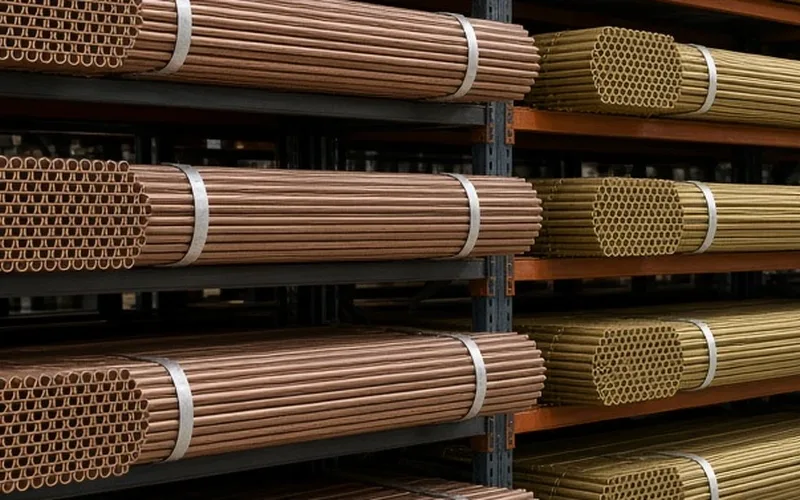
Design & Fabrication
Materials
The metal in the tubes, the rubber in the joints, and the paper that proves which heat went where.
+ Learn More