
1-805-484-2992
Quotes - Engineering - Sales18 to 45 percent fat
A fluid that changes with every degree
Cream is milk fat in water, and the fat is what makes it hard. At 40 F a 40 percent cream is 30 to 40 cP because half its fat is crystalline; at 166 F it is 3 cP. A cream cooler starts with a thin fluid and ends with a thick one, so it is sized at the thick end, and velocity is limited at both ends because shear damages the membrane around each fat globule.
Half and half at 12 percent, whipping cream at 30 to 36, heavy cream at 40 and manufacturing cream at 45 percent are four different fluids.
Heating cream, cooling cream, and what shear does to both
Heating cream: easier than it looks
Cream thins on the way up, so the heating section is sized at the inlet viscosity and gets easier along its length. The regenerator is the problem: cold cream at 30 cP runs laminar in a 3 mm gap and the outer plates starve. Wide-gap plates at 6 to 8 mm fix that to about 36 percent fat; above that, a tube-in-tube regenerator is honest and regeneration drops to 75 to 85 percent.
Cream fouls more than milk in the heating section because fat carries protein to the wall and the lower film coefficient runs the wall hotter. A 5 to 8 degree approach, 15 to 20 percent more area than milk and a 6 to 8 hour run are normal.
Cooling cream: where the design is
Cooling is the hard direction. The last 20 degrees happen in a fluid ten times thicker than the first 20, at a wall where fat is crystallizing. The cooler is sized at the cold end: a 6 to 8 mm gap or a 1.5 inch bore, 2 to 3 ft/s, and glycol no colder than 25 F so the wall does not grow a solid fat layer.
Two-stage cooling is standard. Chilled water at 34 F takes cream from 60 F to 44 to 46 F, where it is still 15 cP; glycol takes it to 38 to 40 F. Putting the whole duty on glycol makes the glycol section huge and its front end wasted. Separation, standardization and the rest of the cream line are covered on our dairy cream processing page.
- Chilled water to 44 to 46 F, glycol to 38 to 40 F
- Glycol inlet no colder than 25 F
- Pressure drop under 20 psi at 40 F outlet
Shear, churning and feathering
Every fat globule is wrapped in a membrane, and shear breaks it. Break enough and the free fat coalesces: warm cream feathers in coffee, cold cream churns into grains in the pipe. High velocity in a narrow channel, a cavitating pump and a sharp reducer all do it. The rule is 2 to 3 ft/s in plates, 3 to 4 in tubes, under 15 psi per section: half a milk exchanger's velocity and twice its channels.
Whipping cream is the most sensitive, because whipping depends on the same membrane. HeatX quotes whipping and heavy cream on tube-in-tube even at 36 percent, because a 1.5 inch bore at 3 ft/s is gentler than any plate channel.
The common mistake
Running cream through the milk cooler. Gapped at 3 mm and sized at 2 cP, on 40 percent cream at 40 F it is a laminar, channeling, high-shear device. The cream comes out at 46 F instead of 40, the pump is at 60 psi and the cream in the tank has butter grains on top. The fix is not a bigger pump; it is a wide-gap section or a tube-in-tube with half the velocity and twice the area.
Send the fat content, the flow, the temperatures, the utilities and whether the cream is for fluid sale, whipping, churning or culture. Call and talk it through with an engineer: 1-805-484-2992


Cream heating and cooling process conditions
Cream behaves differently at each fat level, so the rows below follow the product from separator to cold storage. Check them against your own fat content and flow, and include both in the quote request.
| Condition | Detail |
| Product | Half and half 12 percent to manufacturing cream 45 percent fat |
| Flow range | 2,000 to 30,000 lb/h; separator cream is 8 to 12 percent of milk flow |
| Temperatures in / out | Heating to 166 to 175 F; cooling from 166 F to 38 to 40 F |
| Hold | 15 seconds at 166 F; 25 seconds at 175 F with sweetener |
| Utility | Hot water at 5 to 8 degree approach; chilled water then glycol at 28 F |
| Velocity | 2 to 3 ft/s in plates; 3 to 4 ft/s in tubes |
| Viscosity | 3 cP at 166 F; 30 to 40 cP at 40 F for 40 percent cream |
| Construction | Wide-gap plate to 36 percent; tube-in-tube or straight tube above |
| Finish / class | 3-A, 316L, 32 Ra; EPDM gaskets; tri-clamp on tubes |
| CIP | Cold rinse first, then hot caustic with surfactant |
Common FAQs
166 F for 15 seconds for cream at 10 percent fat or more under the PMO, 175 F for 25 seconds with sweetener. Vat pasteurization of cream is 150 F for 30 minutes.
Viscosity. At 40 F a 40 percent cream is 15 to 20 times thicker than milk, so the last 15 degrees need as much area as the first 100. The cooler is sized at the cold end.
Wide-gap plates handle cream to about 36 percent fat at 2 to 3 ft/s. Above that, or for whipping cream, a tube-in-tube or straight-tube unit has a wider bore and lower shear for the same duty.
Cold or lukewarm rinse first so the fat does not set, then hot caustic at 165 F with a surfactant, then acid. Hot water as the first rinse cooks the fat film onto the plates.
Related

Applications
Raw Milk Cooling
Receiving bay and farm coolers on well and chilled water, sized for the August tanker and the two-hour rule.
+ Learn More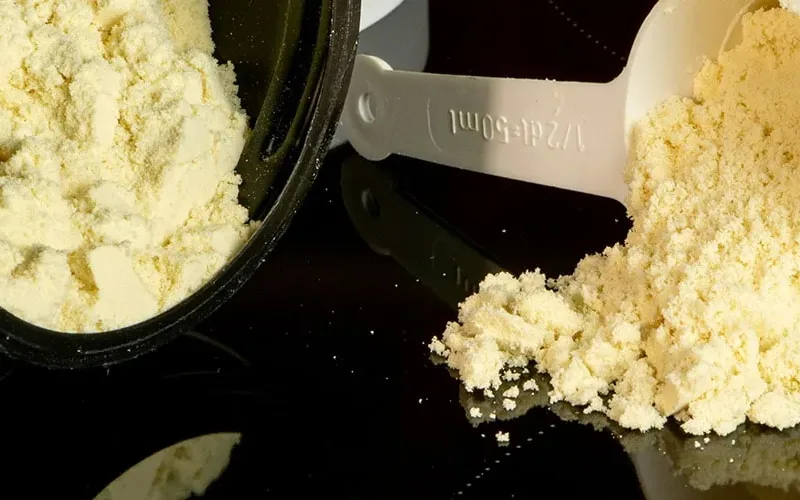
Applications
Whey & Permeate
Sweet and acid whey, UF and RO permeate: cooled off the vat, warmed for the membrane, preheated to evaporate.
+ Learn More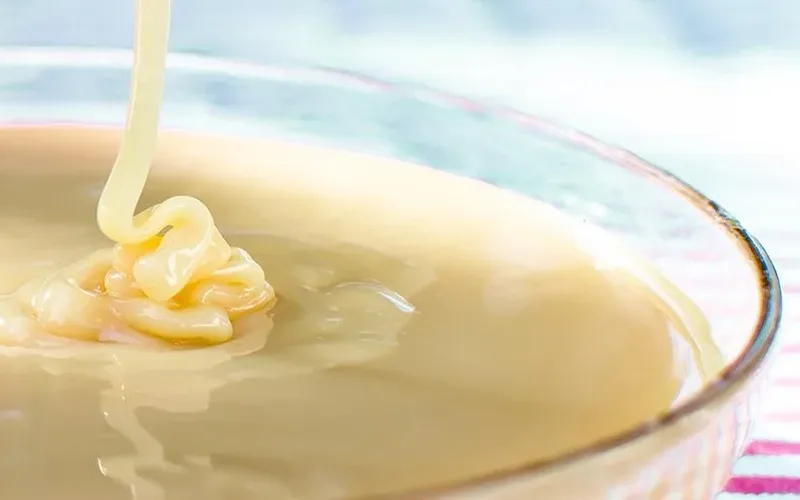
Applications
Condensed & Evaporated Milk
Forewarmers, evaporator preheaters and concentrate coolers for milk at 30 to 50 percent solids, to 5,000 cP.
+ Learn More