
1-805-484-2992
Quotes - Engineering - SalesCream to the churn and beyond
Two fluids: cream with fat in it, and fat with almost nothing else
The butter room handles milk fat in two states. Before the churn it is cream at 40 percent fat, an emulsion that has to be pasteurized, ripened and tempered so its fat crystallizes in the right proportion. After the churn, or a separator and phase inverter, it is anhydrous milk fat at 99.8 percent, with no protein to foul, no water to boil, and a viscosity that goes from 10 cP at 140 F to solid at 80 F.
This page follows the fat: cream for butter, then AMF and ghee.
Cream for butter, then the fat by itself
Pasteurizing cream for the churn
Churning cream is pasteurized harder than fluid cream: 185 F for 15 seconds is a floor and many plants run 195 to 205 F, because the high temperature inactivates lipase that would turn the butter rancid and drives off feed flavors. At 200 F the wall is above the point where whey protein sets, and cream carries protein to the wall in its fat. The heating section gets a 5 to 8 degree approach and 15 to 20 percent area margin.
Vacuum deaeration at the pasteurizer outlet is common on cream from silage-fed herds; the cream flashes at 10 to 15 psia and loses a few degrees, which HeatX includes in the cooler sizing.
Ripening and tempering
Cream is cooled to 46 to 55 F and held 12 to 16 hours so part of its fat crystallizes. How much sets the butter's spreadability and churning yield, and plants control it with a program: cold first to 46 F to nucleate small crystals, warm to 60 to 65 F for a few hours, then cool to a churning temperature of 48 to 54 F. The cream cooler does the first step; the ripening tank jacket does both directions.
Shear is the limit on every piece of this. Cream about to be churned should not be churned by a pump or an exchanger first: 2 to 3 ft/s in wide-gap plates or a 1.5 inch tube, pressure drop under 15 psi, positive displacement transfer. Churning, working and the rest of the butter line are covered on our butter processing page.
- Cool to 46 F, warm to 60 to 65 F, cool to 48 to 54 F
Anhydrous milk fat, butter oil and ghee
AMF is made by melting butter or by concentrating cream to 75 to 80 percent fat, inverting the emulsion and separating the oil, which is dried under vacuum at 190 to 200 F and cooled to 90 to 95 F for drums. Every exchanger in that train handles nearly pure fat: no protein to foul, nothing to boil, a wide approach tolerated. What it does is set solid at 80 to 85 F.
AMF heaters are straight-tube or U-tube on hot water or low-pressure steam at a 10 to 20 degree approach. AMF coolers run on tempered then chilled water and stop above the setting point. Both are traced, sloped to a heated drain and fitted with a hot flush. Ghee is butter cooked at 230 to 250 F until the water is gone and the solids brown, in a steam-jacketed kettle or a tube-in-tube on steam.
The common mistake
Shutting down an AMF cooler with fat in it. The line stops, the chilled water runs another minute, the tubes drop below 85 F, and the next morning the unit is a 400 pound block of milk fat that takes a day to melt out and comes out oxidized. An AMF exchanger is designed to be emptied hot: sloped tubes, heated low points, a hot flush and an interlock that stops the utility when the product pump stops.
Send the fat content and flow for cream, the ripening program, and for AMF the process route and utilities. Call and talk it through with an engineer: 1-805-484-2992



Butter and milk fat process conditions
Cream for the churn and pure milk fat behave differently in an exchanger, so the rows are split along those lines. Read the rows for your route, and send fat content, flow and utilities with the quote request.
| Condition | Detail |
| Product | Churning cream 38 to 42 percent fat; anhydrous milk fat; ghee |
| Flow range | Cream 5,000 to 30,000 lb/h; AMF 2,000 to 15,000 lb/h |
| Temperatures in / out | Cream to 185 to 205 F, cooled to 46 to 55 F; AMF 140 F to 90 F; ghee to 250 F |
| Hold | Cream 15 seconds at 185 F; ripening 12 to 16 hours; ghee 15 to 30 minutes |
| Utility | Hot water on cream; steam on AMF; glycol on cooling |
| Approach | 5 to 8 degrees on cream heating; 10 to 20 on AMF |
| Viscosity | Cream 3 cP hot, 40 cP cold; AMF solid below 80 to 85 F |
| Construction | Wide-gap plate or tube-in-tube on cream; traced straight tube or U-tube on AMF; kettle on ghee |
| Finish / class | 3-A on cream; 316L, 32 Ra; AMF units drainable, heated low points |
| CIP | Cream: cold rinse then hot caustic. AMF: hot flush first |
Common FAQs
To inactivate lipase, which would turn the butter rancid in storage, and to drive off feed flavors. 185 F for 15 seconds is the floor.
The cooler takes the cream to 46 F first, at low shear on glycol; the ripening tank jacket then warms to 60 to 65 F and cools again to churning temperature.
It needs a sanitary, drainable exchanger in 316L, but the design is driven by the setting point at 80 to 85 F: heated connections, a sloped drain, a hot flush and a utility interlock.
Ghee is cooked at 230 to 250 F with no water left to boil, so the exchanger is a steam-jacketed kettle or a tube-in-tube on steam with a wide approach. It is cleaned with a hot oil flush, then caustic.
Related
Applications
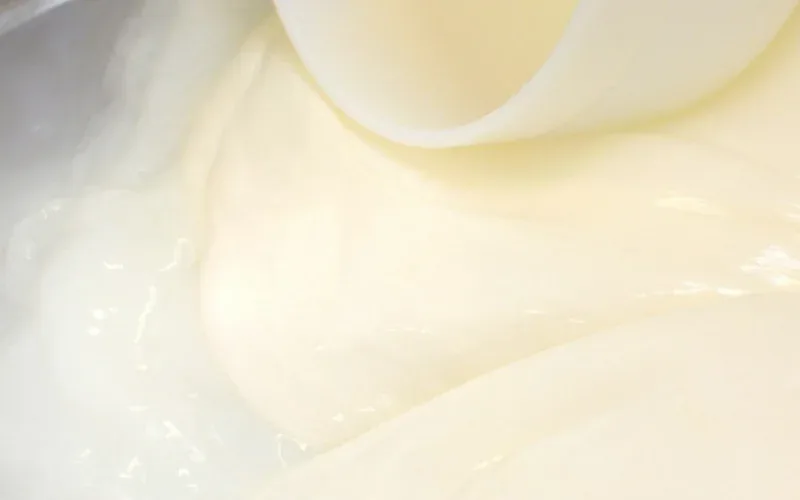
Culture & Incubation
Landing the mix at 108 to 113 F, holding it there for hours, and cooling the set product without breaking it.
+ Learn More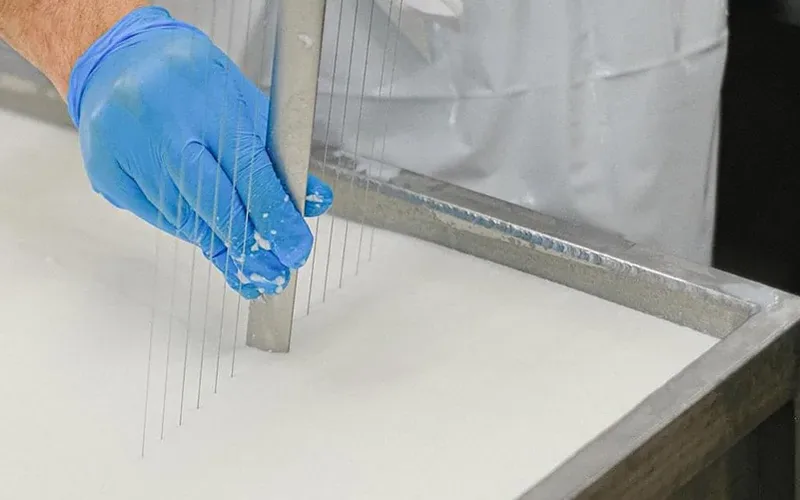
Applications
Cheese Milk Heating
Thermized, pasteurized or raw, the milk reaches the vat at 88 to 90 F within a degree, on tempered water.
+ Learn More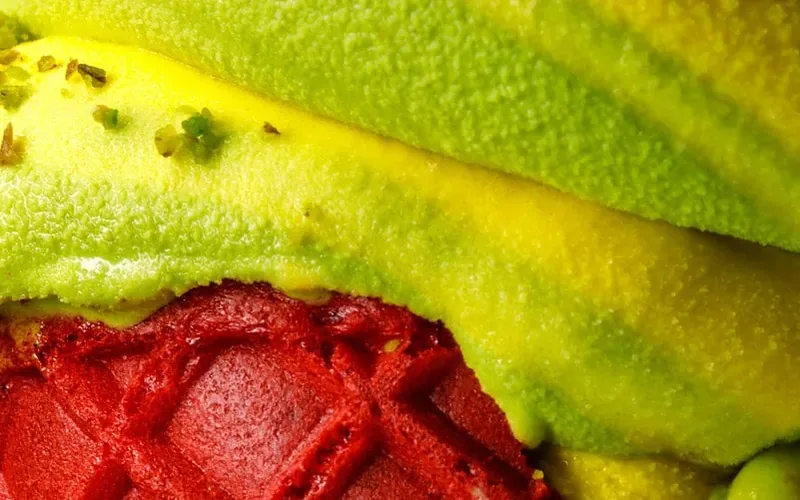
Applications
Ice Cream Mix
38 to 40 percent solids, pasteurized at 175 F for 25 seconds, homogenized hot and cooled to 40 F for aging.
+ Learn More