
1-805-484-2992
Quotes - Engineering - SalesPackaging hall and cellar
Heat applied to finished beer, and cold applied everywhere else
Everything the brewery does to beer after fermentation is done cold, except pasteurization. Cold crash to 30 to 32 F, filtration, carbonation and bright tank storage all run on glycol through plate exchangers. Then, for packaged beer that has to sit on a warm shelf, it is heated to 160 F for 15 to 30 seconds and cooled back down, in a flash pasteurizer before the filler or a tunnel after it.
This page covers the flash pasteurizer as an exchanger, the water system that feeds a tunnel, and the glycol chillers in the cellar.
Flash, tunnel and the glycol side
Flash pasteurizing beer under pressure
A flash pasteurizer heats beer from the bright tank at 34 F to 160 to 165 F, holds it 15 to 30 seconds and cools it back to 34 F before the filler. The kill is expressed in pasteurization units, one PU being one minute at 140 F, and most breweries target 15 to 30 PU. With regeneration at 92 to 95 percent, beer to beer, the hot water heater supplies only the last 8 to 12 degrees.
The beer is carbonated, and CO2 at 160 F wants to leave. The whole pasteurizer runs at a back pressure of 60 to 100 psi, above the saturation pressure of the beer at the hold temperature, with a back pressure valve after the cooler and a design pressure of 150 psi on the plates. Let the pressure drop and the beer foams on the hot plates and the hold is lost. A booster pump on the pasteurized side keeps the regenerator pressure difference in the safe direction.
Tunnel pasteurizer water
A tunnel pasteurizer sprays filled and sealed cans or bottles with water in zones that step from 100 F up to 145 to 150 F and back down over 30 to 60 minutes, delivering the PUs to the sealed package. The tunnel needs a supply of hot water for the heating zones and cool water for the cooling zones, and the two are linked through plate exchangers so that heat picked up in the cooling zones is put back into the heating zones. A steam-to-water set makes up the difference and a tower water or glycol plate exchanger trims the last cooling zone.
The tunnel's water is not product-contact, but it is warm and full of beer from broken containers, so its plate exchangers carry a fouling allowance.
Cellar glycol: cold crash, filtration and bright tank
After fermentation the beer is crashed to 30 to 32 F to drop yeast and haze. Jackets do it slowly; a plate exchanger on glycol in a recirculation loop does it in hours and also chills the beer ahead of the filter and carbonator. Glycol at 24 to 28 F with a 4 to 6 degree approach reaches 30 F on the beer; pushing glycol to 20 F to speed the crash puts ice in the pack.
Where the brewery wants glycol separated from finished beer, the cellar chiller is a double-wall plate unit at 10 to 15 percent more area.
The common mistake
Sizing the flash pasteurizer for the filler's average speed and cutting the hold tube for it. At the filler's rated speed the beer is in the hold tube for 12 seconds, not 20; the PU target is missed and the brewery finds out from a retailer. HeatX cuts the hold tube on the filler's peak rate and sizes the plates so the pasteurizer keeps 160 F at that flow. Send the filler speed, the CO2 volumes, the PU target, and the glycol and steam available. Call and talk it through with an engineer: 1-805-484-2992




Beer pasteurization and glycol process conditions
The conditions below cover the flash pasteurizer, the tunnel water system and the cellar chillers in one place. Pick out the duty you are buying for and send your filler speed, CO2 level and utilities with the request.
| Condition | Detail |
| Product | Bright beer, cider, hard seltzer; 2.5 to 3.0 volumes CO2; 1.5 to 3 cP |
| Flow range | Flash 20 to 400 gpm to match the filler; cellar chillers 20 to 500 gpm |
| Temperatures in / out | Flash: 32 to 38 F in, 160 to 165 F at the hold, 32 to 38 F out. Cellar: 68 F to 30 to 32 F for cold crash |
| Hold | 15 to 30 seconds at 160 to 165 F; 15 to 30 PU |
| Utility | Hot water at 165 to 170 F from a steam-to-water set; glycol at 24 to 28 F |
| Approach | 3 to 5 degrees on the heater; 4 to 6 degrees on glycol |
| Construction | Three-section gasketed plate with regeneration to 95 percent; double-wall plate on glycol where required |
| Finish / class | 316L plates, 32 Ra; EPDM gaskets; design pressure 150 psi for CO2 back pressure |
| CIP | Caustic 2 percent at 160 F, acid for beerstone, sanitizer; after every packaging run |
Common FAQs
160 to 165 F for 15 to 30 seconds, which delivers about 15 to 30 pasteurization units depending on the brewery's target.
Because the beer is carbonated and CO2 leaves solution at 160 F unless the pressure stays above saturation, about 60 to 100 psi. Without it the beer foams on the hot plates and the hold is lost.
Flash pasteurizes the beer before filling and is smaller and cheaper to run, but needs a clean filler because the package is not treated. A tunnel pasteurizes the sealed package and forgives the filler, at the cost of floor space and energy.
24 to 28 F with a 4 to 6 degree approach to reach 30 F on the beer. Colder glycol freezes beer on the last plates when the flow drops; the approach, not the glycol temperature, is what sizes the exchanger.
Related
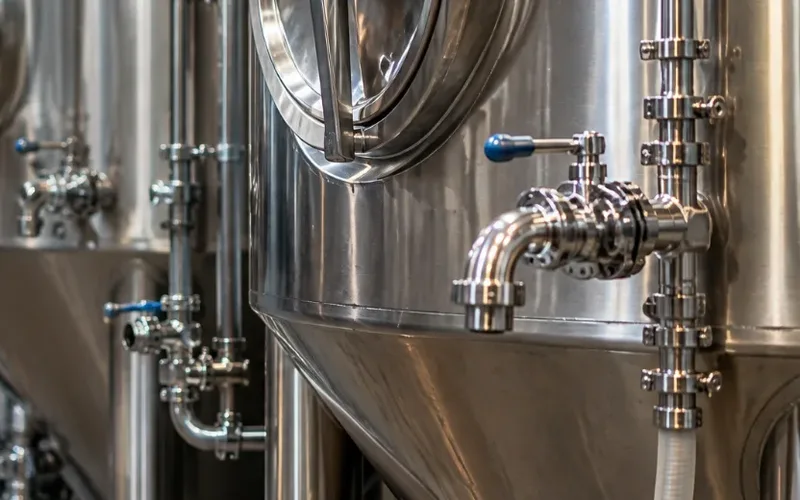
Applications
Wort Cooling
Knock out a 30 barrel batch in 45 minutes, land the hot liquor at 175 F and the wort at pitching temperature.
+ Learn More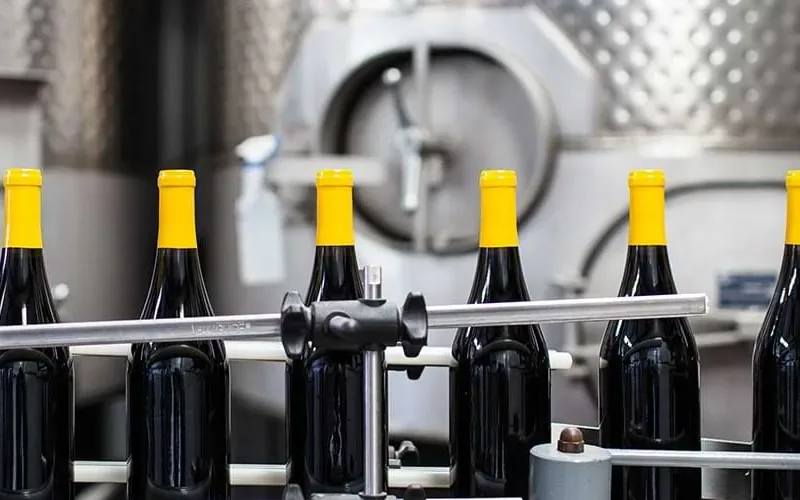
Applications
Wine Must
Cool the must at the crusher, hold it cold for the soak, warm it for the yeast, seeds and skins included.
+ Learn More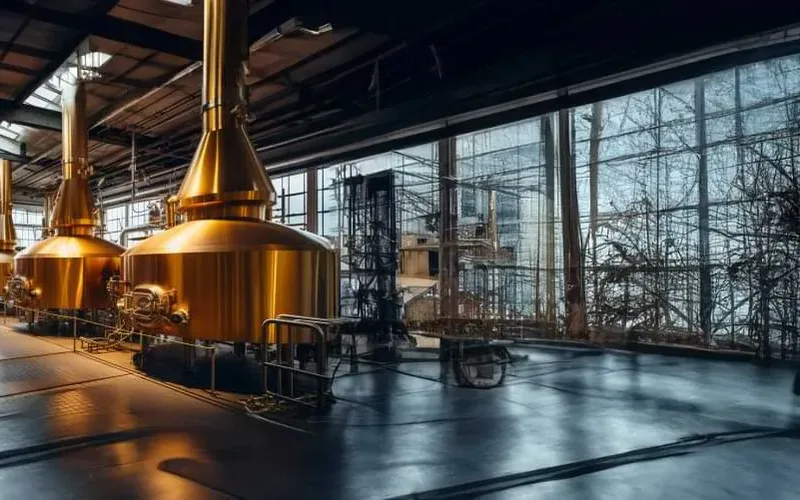
Applications
Distillation & Alcohol
Mash heated and cooled, vapor condensed at the boil-up rate, spirit brought to collection temperature.
+ Learn More