
1-805-484-2992
Quotes - Engineering - SalesThe boiler's water
Demineralized water goes into the boiler hot and into the resin cold
Demineralization is ion exchange run at plant scale: a cation bed regenerated with acid, a degasifier for carbon dioxide, an anion bed regenerated with caustic, and a mixed bed polisher if the boiler pressure or the process demands it. It removes calcium, magnesium and silica so boiler tubes and turbine blades do not scale, and the water it makes feeds the plant steam that runs everything else, including the culinary and clean steam generators on a sanitary site.
Three exchangers live in a demin plant: a cooler on the raw water before the resin, a makeup heater on the demin water before the deaerator, and a cooler on the regeneration waste before drain. The parent page settles the metal; this page is about those three duties and the temperatures that constrain them.
The three exchangers in a demineralization plant
Cooling raw water ahead of the resin
Strong-base anion resin is rated to about 140 F and loses capacity above 100 F, so a plant whose raw water comes from a warm well, recovered condensate or a process return puts a cooler ahead of the beds. It is a water-to-water duty on tower water, and a gasketed plate in 304 or 316 is usual because the raw water is still hard and the plates open for descaling. Size it on the warmest raw water of the year, which on condensate return may be 180 F.
Heating makeup before the deaerator
Demineralized makeup enters the deaerator, which strips oxygen by heating the water to saturation at 5 to 15 psig, and every degree the makeup arrives short of that is steam the deaerator has to spend. The makeup heater lifts demin water from 60 F to 200 F or more, and the cheapest heat for it is the boiler's own blowdown and returning condensate: a blowdown heat recovery exchanger in 316L takes 300 F blowdown down to 140 F, warms the makeup 30 to 60 degrees, and the balance comes from a low-pressure steam U-tube heater.
The demin side of both units is 316L. Demineralized water is aggressive because of what is not in it: no hardness, no alkalinity, and whatever carbon dioxide slipped the degasifier makes carbonic acid with nothing to buffer it. Carbon steel rusts and sends iron into the boiler; 304 pits at the hot end of the makeup heater within a few years.
- Blowdown recovery: 316L straight tube, blowdown on the shell, makeup in the tubes, brushable
- Steam heater: U-tube, steam on the tube side at 15 to 50 psig, makeup on the shell
- Outlet held 5 to 10 degrees below deaerator saturation to avoid flashing in the line
Cooling the regeneration waste
Regeneration sends acid through the cation bed and caustic through the anion bed, with the caustic warmed to 120 F to strip silica from the resin. The spent regenerant is neutralized in a pit and goes to drain, and most sewer codes stop at 140 F. Where warm caustic or a hot backwash pushes the waste past that, a small cooler on tower water brings it down; its wetted side is 316L or better because the waste swings from pH 1 to pH 13 through the cycle.
The common mistake
Treating the makeup heater as a boiler accessory and buying it in carbon steel with copper tubes because that is what the last one was. Copper in 200 F demin water dissolves and plates out in the boiler and turbine; carbon steel channels rust and add iron. The corrected unit is 316L on the demin side with whatever the plant likes on the steam side. Call and talk it through with an engineer: 1-805-484-2992



Demineralized water process conditions
Demineralized water is aggressive and easily contaminated, so wetted metal and layout matter as much as duty. Check the rows against your treatment train and send your water quality and utilities with the quote request.
| Condition | Detail |
| Fluid | Demineralized water, 0.1 to 1 microsiemens, silica under 20 ppb; raw water ahead of the beds; spent regenerant |
| Flow range | 10 to 500 gpm makeup; 50 to 2,000 gpm on power and large process plants |
| Temperatures in / out | Makeup 50 to 70 F heated to 200 to 220 F before the deaerator; raw water cooled to under 100 F before the anion bed |
| Hold | None |
| Utility | Boiler blowdown, condensate or low-pressure steam on the makeup heater; tower water on the coolers |
| Approach | 10 to 15 degrees on blowdown recovery; 8 to 10 on tower water |
| Construction | U-tube on steam; straight tube on blowdown recovery; gasketed plate on water-to-water coolers |
| Finish / class | 316L tubes and channels, mill finish; carbon steel shell acceptable on the utility side only |
| Silica and CO2 | Silica limit set by boiler pressure; carbonic acid from the degasifier carry-over is the corrosion driver |
| CIP / SIP | Not applicable; brushable tubes and removable channels for inspection |
Common FAQs
Same process, different scale and purpose. Demineralized usually means plant-scale ion exchange for boiler feed at 0.1 to 1 microsiemens; DI usually means a polished loop for laboratory, electronics or pharmaceutical use at higher resistivity.
On blowdown or hot water it is fine in 316L. On steam the plate gasket is the limit at 200 F outlet, and a U-tube with steam in the tubes is more forgiving of the pressure and the cycling.
Cation resin to about 250 F; strong-base anion resin to about 140 F with capacity loss above 100 F. Cool anything warm before the anion bed and heat demin water only after the beds.
RO followed by a mixed bed is the usual modern train. Straight demin is used where raw water is low in dissolved solids or the plant already has the regeneration chemistry. The exchangers are the same either way.
Related
Applications
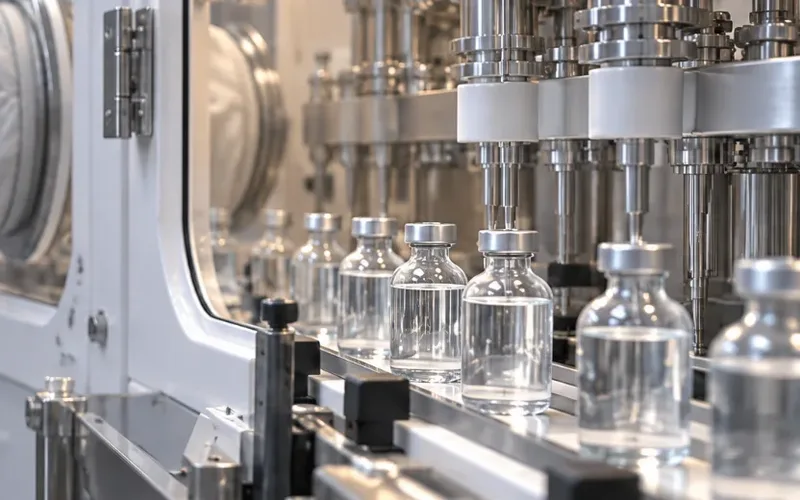
Sterile Water
Cooling and heating water that has to stay sterile after the still, from the hot loop to the last valve.
+ Learn More
Applications
RO Water
Feed heaters that respect the membrane limit, and permeate exchangers for water that is acidic and empty.
+ Learn More
Applications
DI Water
Deionized water pulls metal from anything it touches; the exchanger is built so it finds nothing to take.
+ Learn More