
1-805-484-2992
Quotes - Engineering - SalesPick the construction before you pick the size
A sanitary heat exchanger is any heat exchanger whose product side can be cleaned to a verifiable standard and drained to nothing. That single requirement is what separates it from a plain stainless unit: every product-contact surface is polished to a stated roughness (32 microinch Ra is the usual food-grade floor, 20 Ra or electropolished for pharma), every joint on the product side is either welded or a tri-clamp ferrule, and the unit is oriented so nothing pools after a CIP rinse.
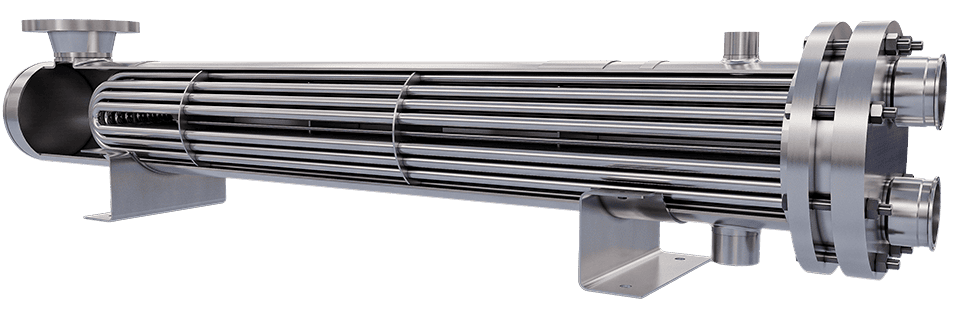
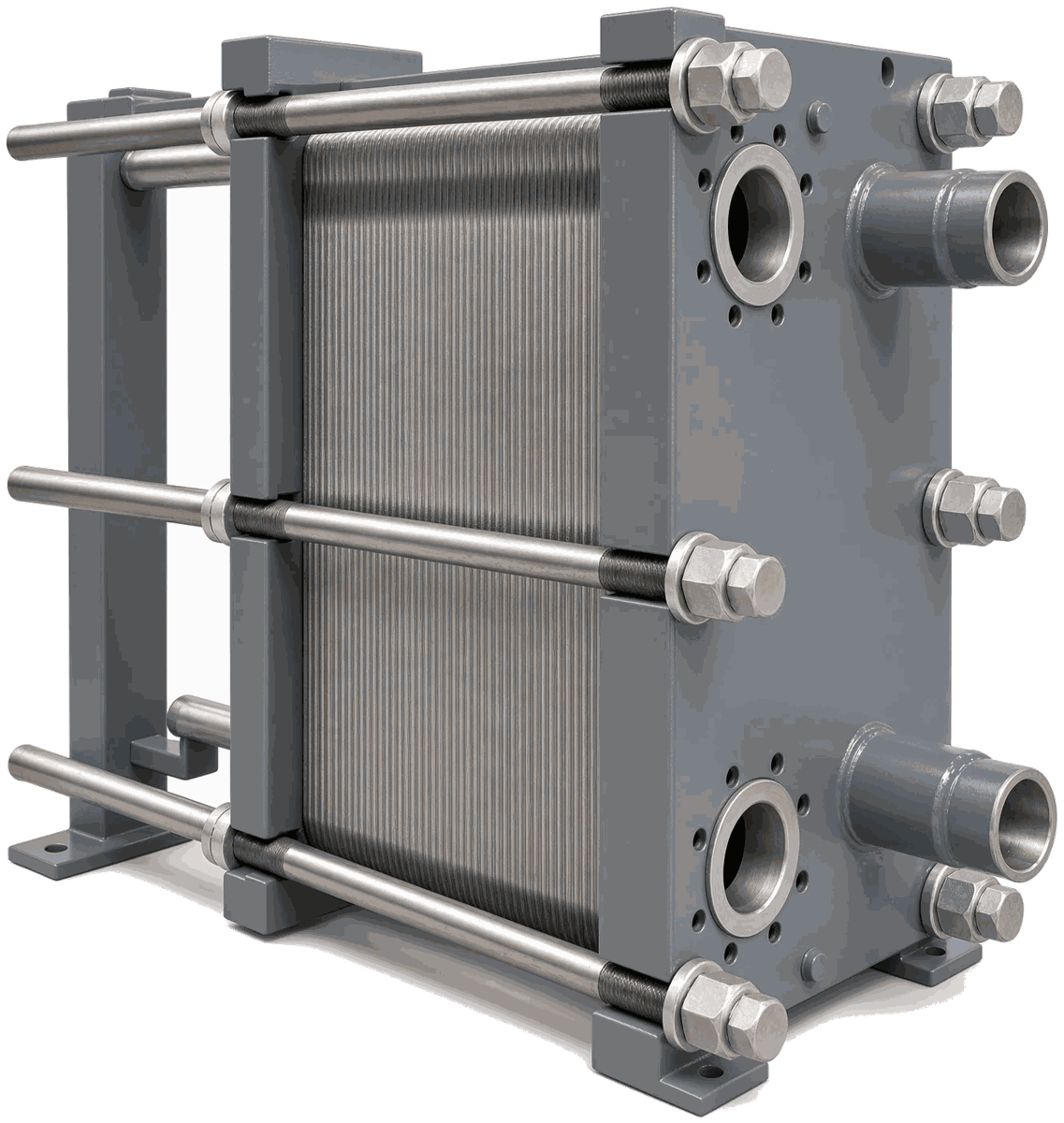
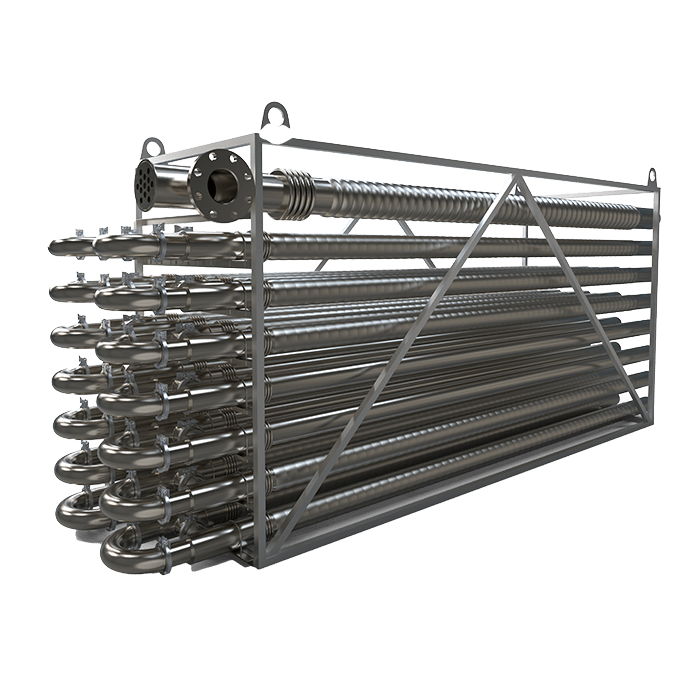
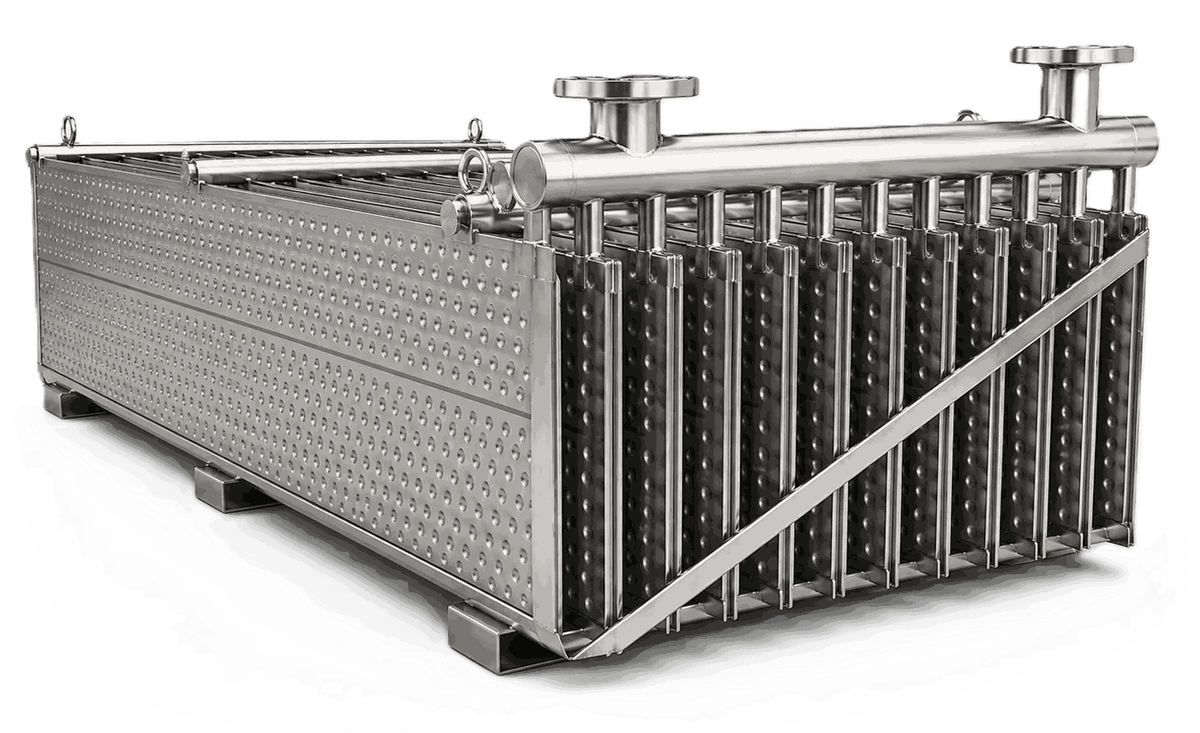
Four constructions cover nearly every sanitary duty. Shell and tube for high pressure, high temperature and steam. Gasketed plate and frame for water-like product at close approach and with regeneration. Tube-in-tube for viscous product, pulp, particulates and anything that would plug a plate. Evaporators, condensers and clean steam generators for phase change on the product or utility side.
The material is 304L or 316L almost without exception. The construction, on the other hand, is decided by viscosity, particulates, pressure and how much cleaning the process will tolerate, and that is the decision this section walks through.

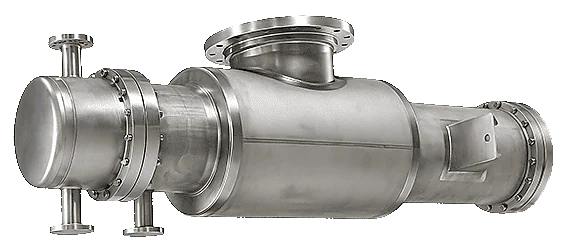





What every sanitary construction shares
Regardless of geometry, a unit leaving here for sanitary service is built to the same short list. Product-contact surfaces are polished to the specified Ra and then passivated; electropolishing is added where the spec calls for it. Tube-to-tubesheet joints on the product side are seal welded, usually by orbital TIG, so there is no rolled joint crevice. Connections are tri-clamp ferrules in 1/2" through 4" and larger, or ASME BPE fittings for pharma.
Drainability is designed in, not added later. Horizontal shell and tube units carry a slight pitch and a low-point drain; plate units drain through the bottom port; tube-in-tube units are arranged so the product tube runs downhill to the outlet. If a surface would hold liquid after the last rinse, the design is changed until it does not.
- 32 Ra food grade, 20 Ra or electropolished pharma
- Tri-clamp, ASME BPE or sanitary flange connections
- No threads, no rolled joints, no dead legs on the product side
- Full drainability in the installed orientation
Where the constructions part ways
Pressure and temperature are the first split. Gasketed plates top out where the elastomer does, typically 150 psig and around 250 F for EPDM, which is fine for HTST and CIP at 160 to 180 F but marginal for SIP at 250 F plus or for steam on the utility side. Shell and tube and tube-in-tube carry 150 psig as a routine design point and can go well beyond it.
Product character is the second split. Water-like product with no solids belongs in plates. Viscosity above roughly 500 cP, particulates above about 1/8", pulp, fibers or whole fruit belong in tube-in-tube. Anything in between is usually shell and tube with a tube diameter chosen for the largest particle. Call and talk it through with an engineer: 1-805-484-2992
- Plates: close approach, regeneration, easy expansion
- Shell and tube: steam, high pressure, long life
- Tube-in-tube: viscous, particulate and fibrous product
- Evaporators and condensers: phase change on either side
Common FAQs
Three things: the product-contact surface finish is specified and measured (typically 32 Ra or better), every product-side joint is welded or a sanitary clamp rather than threaded or rolled, and the unit drains completely in its installed orientation. A stainless unit with NPT ports and a rolled tube joint fails all three even though it is the same alloy.
Food and dairy plants inspected under the PMO generally ask for 3-A; the shell and tube standard is 3-A 12-07 and plate exchangers have their own. Pharma and biotech water and product systems usually specify ASME BPE, which adds tighter Ra limits, weld documentation and dead-leg rules. Many beverage, brewery and sauce lines only need a drainable, polished, tri-clamp unit with no formal mark. Tell us which inspection you face and we build to it.
Yes on shell and tube, tube-in-tube and clean steam generators, which are routinely designed for 150 psig steam. Gasketed plate units are limited by the gasket compound and are usually kept to hot water or low-pressure steam below the elastomer's rating.
Tri-clamp ferrules from 1/2" through 4" are standard on the product side, with 6" and larger available on big units. Utility connections can be tri-clamp, ASME flanges or NPT, since the utility side is not product-contact.
As a rule of thumb, plates stop being practical once viscosity passes about 500 cP or particles exceed roughly 1/8". Pulp, seeds, diced product and fibers plug plate channels regardless of gap. Tube-in-tube with a 1" to 2" product tube passes those with margin.
That is the normal way it works. Send product and utility fluids, flow, inlet and outlet temperatures, viscosity or a solids description, the hygiene class and the connections you want. A sized recommendation with area, pressure drop and a price follows.
Related
Sanitary Exchangers
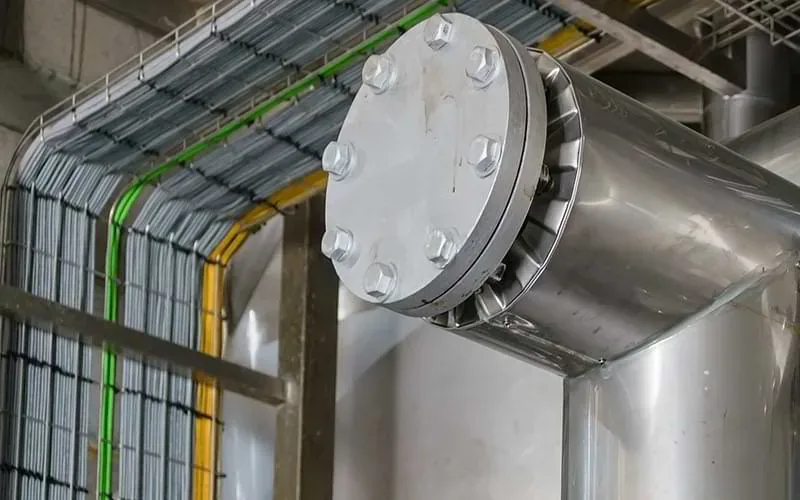
Shell & Tube
Straight tube, U-tube and double tubesheet bundles built for steam, pressure and a clean CIP return.
+ Learn More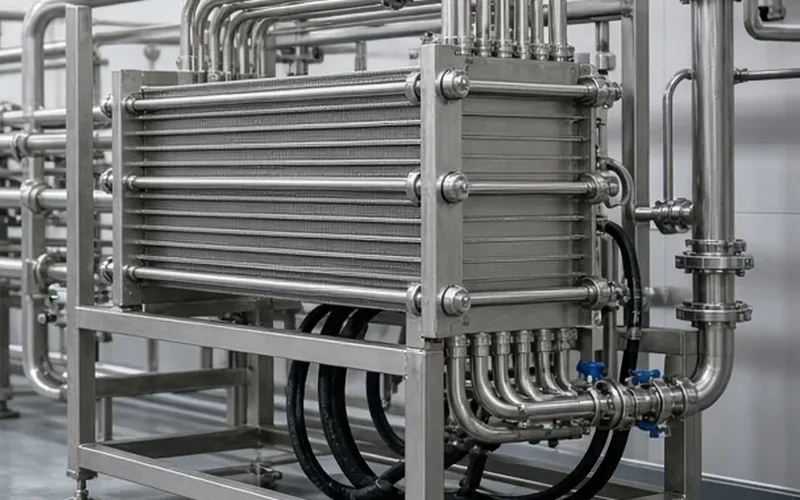
Sanitary Exchangers
Plate & Frame
Close approach, regeneration and a pack that opens for inspection: the pasteurizer's construction.
+ Learn More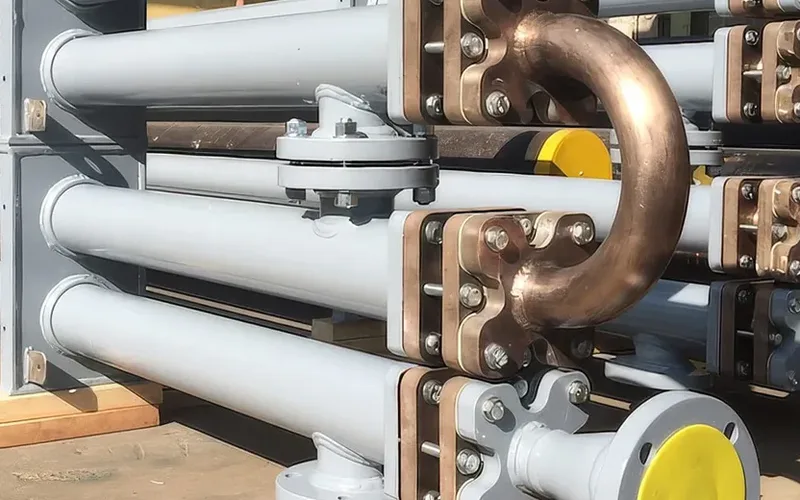
Sanitary Exchangers
Tube-in-Tube
One straight product tube inside a jacket: nothing to plug, nothing to bridge, and full counterflow.
+ Learn More