
1-805-484-2992
Quotes - Engineering - SalesChoosing the frame
Same process, two very different machines
A plate HTST and a tubular HTST both regenerate, heat, hold and cool. The plate does it in a 3 mm channel between gasketed 316L plates; the tubular in a 1 to 2 inch bore. Everything that separates them follows from that: heat transfer per square foot, pressure rating, what fits through the channel, how fast the wall fouls, and what it costs to buy and to open.
Most fluid milk lines are plate and should be. Most cream, mix, pulp and long-run lines are tubular and should be. The wrong choice shows up as a plant that cleans twice a shift or a frame two thirds empty.
Where the crossover is, and why
Viscosity: the first crossover
A plate channel wants turbulent flow and gets it easily on milk at 2 cP. As viscosity climbs, the velocity needed to stay turbulent climbs and the pressure drop with the square of it. Around 20 cP the pack is either laminar, with starved outer channels, or running 40 to 60 psi to stay turbulent. Wide-gap plates push the crossover to about 100 cP. A 1.5 inch tube-in-tube is happy to 2,000 cP and has no outer channels to starve.
The practical breaks: skim to whole milk, plate. Cream to 40 percent, wide-gap plate or tube. Mix, egg nog and anything with stabilizer, tube. Pulp, cocoa, oat or almond bases with fiber, tube, because a 3 mm gap plugs on the first fiber ball no matter what the numbers say.
Fouling and run length: the second crossover
Fouling is about wall temperature, and at the same approach both constructions put the same wall in front of the milk. The difference is what a deposit does. In a 3 mm channel a 0.3 mm protein layer is 10 percent of the gap; pressure drop climbs 20 percent and the plant cleans. In a 1.5 inch tube the same layer is 1.6 percent of the bore. The tubular unit fouls at the same rate and runs two to three times as long before anyone notices.
That is the case for tubes on high-solids mix, fortified milk, and any plant that wants a 16 to 20 hour run. The fouling margin is in the bore, not in the plate count.
Regeneration, pressure and access: where plates keep winning
A plate regenerator at 90 to 95 percent in a section a few feet long has no tubular equivalent. Tubes regenerate 80 to 90 percent in two to three times the length at a higher price per square foot. On a two-shift milk line regeneration is the largest operating cost in the pasteurizer, and plates recover it most cheaply.
Plates also open: a fouled section, a failed gasket or a pinholed plate is fixed on the frame in an hour. A tubular unit is CIP-only or brushable straight tube. Plates lose on pressure: a gasketed frame is honest to 100 to 150 psig, and a homogenizer upstream or a product needing 40 psig of back pressure at 175 F pushes past that.
The common mistake
Buying plates because plates were quoted, and tubes because tubes were on the last line. A plant running 8,000 lb/h of stabilized mix on plates cleans every four hours and blames the CIP. A plant running 60,000 lb/h of skim on tubes has a 40 foot regenerator recovering 85 percent and pays for hot water it did not need. Mixed lines, milk in the morning and mix after lunch, are where a wide-gap plate earns its keep: it handles the mix and regenerates the milk at 88 to 90 percent.
Send the product list with viscosity or fat, the flow, the run length wanted and the shifts. The construction usually picks itself. Call and talk it through with an engineer: 1-805-484-2992




Plate and tubular HTST side by side
Each row sets the plate pasteurizer against the tubular one on the same duty. Read down the column that matches your product, then send your viscosity and flow with the quote request so we can pick the right route.
| Condition | Detail |
| Product fit | Plate: milk, skim, juice under 20 cP. Tubular: cream, mix, pulp, fiber to 2,000 cP |
| Flow range | Plate 5,000 to 150,000 lb/h one frame; tubular 2,000 to 60,000 lb/h per skid |
| Temperatures | 40 F in, 161 to 175 F setpoint, 38 to 40 F out |
| Hold | 15 to 25 seconds in an external holding tube |
| Utility | Plate: hot water at 5 degree approach. Tubular: hot water or steam via U-tube set |
| Regeneration | Plate 90 to 95 percent; tubular 80 to 90 percent in two to three times the length |
| Pressure rating | Plate 100 to 150 psig, gasket-limited; tubular 150 to 300 psig |
| Run between CIP | Plate 6 to 10 hours on milk, 3 to 5 on mix; tubular 12 to 20 hours |
| Finish / class | Both 3-A, 316L, 32 Ra; EPDM plate gaskets; tubular seals only at tri-clamps |
| Access | Plate opens on the frame; tubular is CIP-only or brushable straight tube |
Common FAQs
Yes. The PMO specifies the hold, the regenerator pressure relationship, the diversion valve and the records, not the construction. A double tubesheet tubular regenerator with a booster pump meets it as a plate section does.
Around 20 cP for standard plates and 100 cP for wide-gap, measured at the coldest point in the section. Cream at 40 F and 40 percent fat is already 30 to 40 cP.
The holding tube, diversion valve, recorder, timing pump and booster pump carry over. The sections are replaced by tubular units on a longer skid and the holding tube is re-timed.
For milk under 20 cP a plate line is 30 to 50 percent cheaper to buy and cheaper to run. Above that, the tubular line is often cheaper once CIP chemicals, downtime and extra plates are counted.
Related
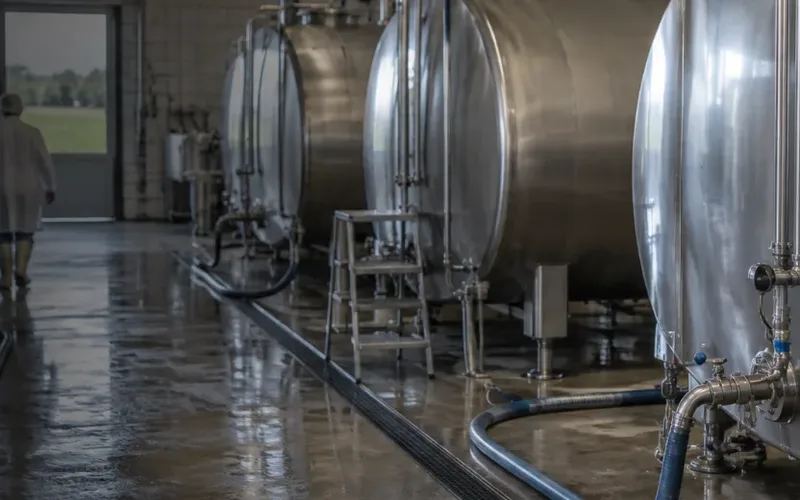
Applications
Milk Pasteurization
Two legal routes for fluid milk, 161 F for 15 seconds or 145 F for 30 minutes, and the exchanger each needs.
+ Learn More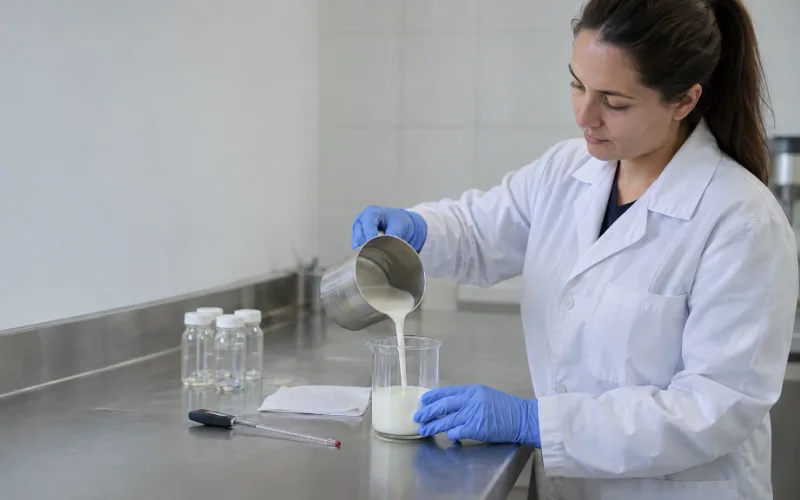
Applications
Regeneration Sections
Raw milk heated by pasteurized milk through a plate, 85 to 95 percent, pressure always pointing the safe way.
+ Learn More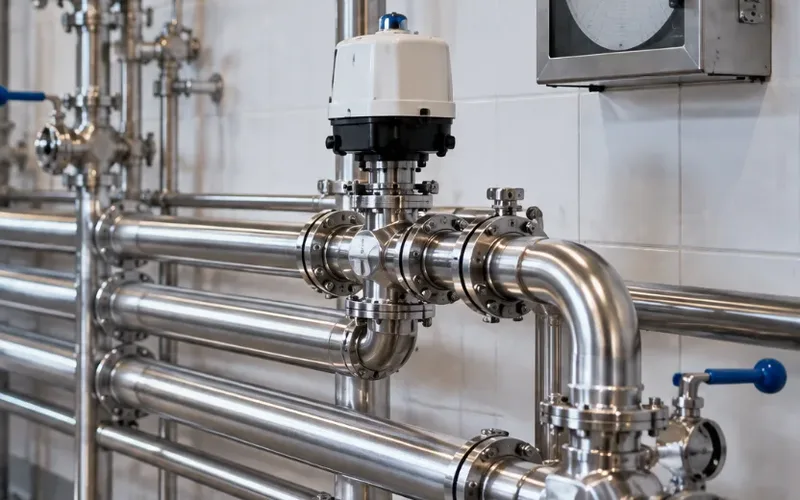
Applications
Holding Tubes & Flow Diversion
Tube length from velocity and hold time, a valve that diverts in under a second, and a chart that proves both.
+ Learn More