
1-805-484-2992
Quotes - Engineering - SalesProduct-to-product heat recovery
The section that pays for the pasteurizer
The regeneration section is a plate pack with raw milk on one side and pasteurized milk on the other. Cold product going in picks up heat from hot product going out, so the heating section supplies only the difference. On a 40,000 lb/h line at 90 percent the section moves about 4.4 million Btu/h between the streams, heat the plant neither buys as hot water nor removes as refrigeration.
It is also the one place where raw and pasteurized milk are separated by a single 0.5 mm plate, which is why it has its own pressure rule, its own pump and a plate count decided by economics.
Efficiency, approach and the pressure rule
How efficiency turns into plates
Regeneration efficiency is the raw milk rise across the section divided by the total rise from raw inlet to pasteurization temperature. Raw at 40 F, pasteurized at 161 F, raw outlet at 149 F: 90 percent. Because both streams are the same fluid at the same flow, the temperature difference is constant along the section, and that difference is the approach: 121 degrees times 10 percent is 12 degrees at 90 percent, 6 at 95.
Plate area scales inversely with approach, so 95 percent needs twice the plates of 90 while the heat saved rises by only 5 percent of the total. That is the whole economic argument: the first 85 percent is nearly free, 90 is the normal design point, 95 pays back in two to four years on two shifts, and anything above is bought for a reason other than money.
The pressure differential and the booster pump
If a regeneration plate cracks, product crosses. The PMO requires the crossing to go from pasteurized to raw, so the pasteurized side runs at least 1 psi higher at every point, in forward flow, in divert and during CIP. A plate pack does not do that by itself: the raw side is pushed by the timing pump and the pasteurized side has only the cooler behind it.
The booster pump is the answer. It sits on the pasteurized side between the regenerator and the cooler, interlocked so it cannot run unless the timing pump runs, the diversion valve is forward and the outlet is above setpoint. A differential pressure controller pens on the same chart as the temperature. The detail that gets missed is shutdown: the raw side must lose head first, so HeatX lays the section out with the raw side draining before the pasteurized side and a booster pump that does not backflow when stopped.
Where double-wall plates belong
The pressure rule makes a single-wall regenerator legal, but pasteurized product crossing into raw is a yield loss the plant notices late. A double-wall plate is two plates pressed together with a vented gap; either can fail and the product weeps out the gap edge, never into the other stream. On a tubular regenerator a double tubesheet does the same job.
Double-wall plates transfer about 20 percent less heat per plate, so the section needs more of them. HeatX quotes them on infant formula, where a leak means a recall, and wherever QA wants physical rather than pressure-based separation. On fluid milk the single-wall section with a proper booster pump is the standard answer.
The common mistake
Buying 95 percent and giving it back to fouling. At 95 percent the approach is 6 degrees. Let 2 degrees of fouling build over a week and the raw outlet drops 2 degrees, the hot water valve opens, the heating section wall climbs and fouls faster. The line still pasteurizes; it just loses the efficiency it paid for. A 95 percent section needs a CIP interval and a pressure drop alarm a 90 percent section does not.
Tell HeatX the flow, the temperatures, the shifts and the steam cost, and the regeneration point falls out. Call and talk it through with an engineer: 1-805-484-2992




Regeneration section process conditions
Each row gives a design point for the raw and pasteurized streams, from approach to the pressure rule. Compare them with your line and send your own temperatures and flows so the plate count starts from your duty.
| Condition | Detail |
| Product | Raw milk, cream, mix or juice; the same product pasteurized on the other side |
| Flow range | 5,000 to 100,000 lb/h, equal mass flow both sides |
| Temperatures in / out | Raw 40 F in, 145 to 155 F out; pasteurized 161 F in, 46 to 56 F out |
| Hold | None; the section sits either side of the holding tube |
| Utility | None; product against product |
| Approach | 6 degrees at 95 percent, 12 at 90 percent, 18 at 85 percent |
| Construction | Gasketed plate, single or double-wall; double tubesheet tube on tubular lines |
| Finish / class | 3-A 12-07 plates, 316L, 32 Ra; EPDM or nitrile gaskets |
| Pressure | Pasteurized side at least 1 psi above raw at the section connections |
| CIP | Both sides in the circuit; raw side drains first on shutdown |
Common FAQs
Yes, 96 to 97 percent is built for large fluid milk lines, at three or more times the plates of a 90 percent section and a tight CIP schedule. Above 97 the approach is under 4 degrees and the outlet swings with every upset.
On the pasteurized side, downstream of the holding tube and diversion valve, upstream of the regenerator. It is interlocked to the timing pump, the valve position and the outlet temperature.
The same efficiency with more area. A tubular regenerator at 90 percent is roughly twice the length of the plate section, but it passes pulp and high fat, and a double tubesheet gives the same protection.
The PMO minimum is 1 psi pasteurized over raw at the regenerator connections; many plants run 2 to 3 psi. Above about 5 psi the raw-side gaskets see a net inward load and can weep.
Related
Applications
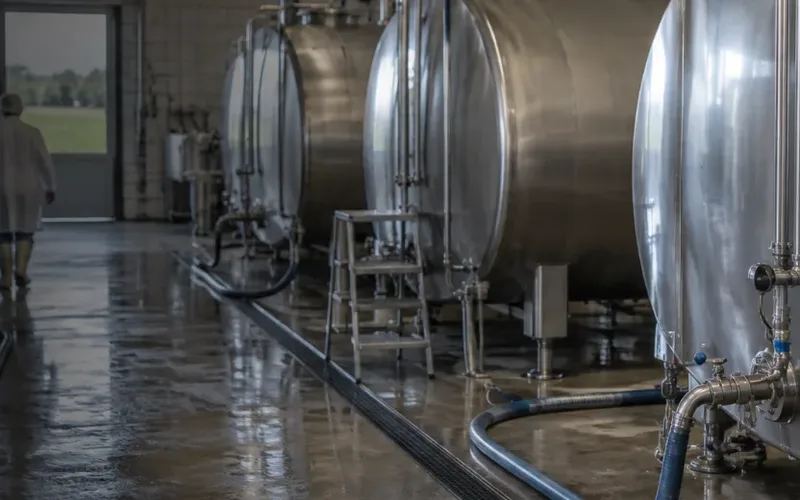
Milk Pasteurization
Two legal routes for fluid milk, 161 F for 15 seconds or 145 F for 30 minutes, and the exchanger each needs.
+ Learn More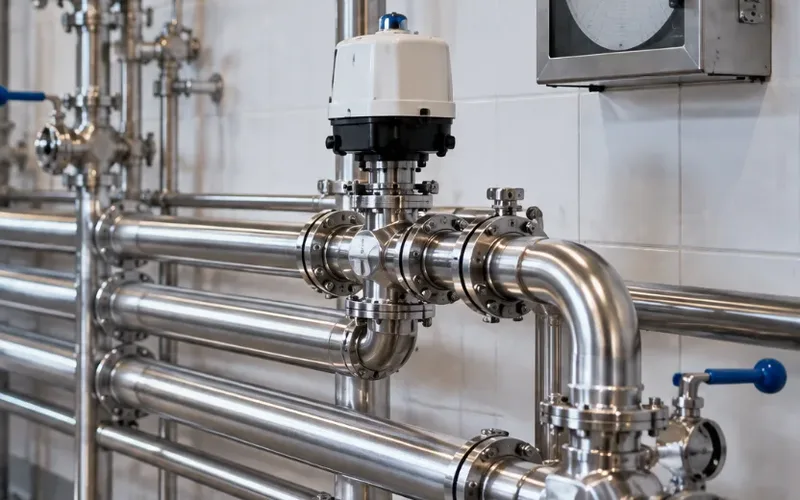
Applications
Holding Tubes & Flow Diversion
Tube length from velocity and hold time, a valve that diverts in under a second, and a chart that proves both.
+ Learn More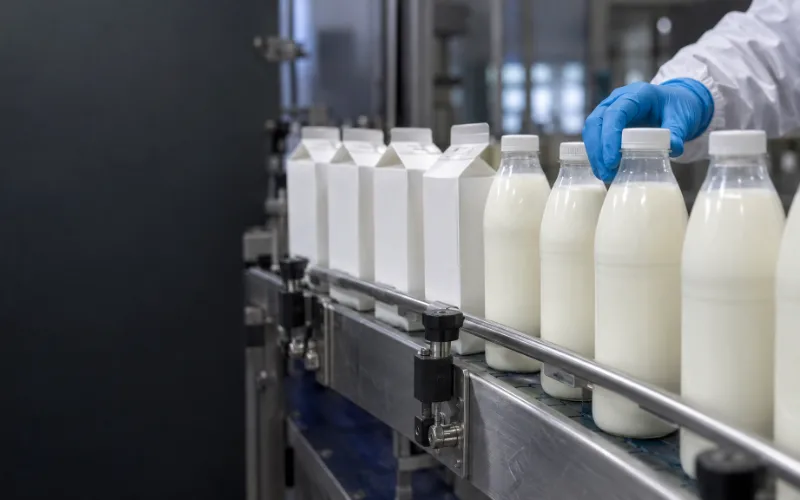
Applications
Plate vs Tubular HTST
Plates for thin milk and short payback; tubes for viscosity, fiber, fouling and 20-hour runs.
+ Learn More