
1-805-484-2992
Quotes - Engineering - SalesChunky soups, stews, chili and chowder
The carrier is easy, the pieces are not
A chicken noodle soup is 90 percent broth at 5 cP and 10 percent pieces of carrot, celery, chicken and pasta at 1/4 to 1/2 inch. The broth would run on a plate; the pieces make that impossible, and they also make the hold time a question about the slowest carrot rather than the fastest drop of broth.
The exchanger is a single tube-in-tube with a 2 or 3 inch product bore, heated on hot water, held in a large-bore tube and cooled on tower water and glycol. Thicker chowders and cream soups behave more like sauces.
Sizing an exchanger for a soup with pieces in it
Bore and velocity for pieces in a thin carrier
In a thin broth, pieces do two things a sauce never does: they settle, and they race. Below about 1 ft/s in a horizontal 3 inch tube a 1/2 inch carrot sinks to the bottom, sits against the hot wall and overcooks while the broth above it stays cool. Above 3 ft/s the same carrot arrives at the filler as shreds. The working band is 1 to 2 ft/s, and a 3 inch bore at 1.5 ft/s carries about 30 gpm, so a 100 gpm soup line is three or four tubes in parallel, each with its own flow control.
The bore itself is twice the largest piece, and the largest piece includes the one the dicer makes when its blade is dull. A 1/2 inch dice needs a 2 inch bore in theory and a 3 inch bore in a plant that wants to run all shift. Other products that carry solids through a tube-in-tube are covered on our food with solids pages.
Residence time on the slowest particle
A dense piece in a thin carrier lags the fluid, and at the tube wall in laminar flow it can move at a fraction of the mean velocity, so the piece that sets the hold is the slowest one, and it is overcooked while the broth around it is right. The hold is therefore kept short, 1 to 4 minutes at 190 to 200 F, and validated by residence time distribution tests with magnetic or dyed pieces at the line's flow.
Where the plant needs a full commercial sterility for shelf-stable soup, the exchanger heats and the retort or aseptic hold does the kill on the particle.
Heating, cooling and the pieces themselves
The heater runs on hot water at 215 to 230 F in the annulus so the broth, not the wall, cooks the vegetables. The cooler is on tower water then glycol; on a chilled soup the base thickens as it cools, particularly a starch-thickened chowder, and the last section is sized at the 40 F viscosity with a 10 to 15 degree glycol approach.
Pasta and rice are the pieces that give the most trouble because they keep absorbing water and softening through the hold. Most lines cook them separately and dose them at the filler, sending only the broth and firm vegetables through the exchanger.
The common mistake
Putting the whole recipe through the exchanger to save a dosing step. Noodles, rice, dumplings and beans above 1/2 inch bridge the bore, disintegrate in the hold or come out overcooked. Run the broth and firm pieces through the tubes and dose the rest. Send the recipe, the largest firm piece, the flow, the hold the process authority set, and the hot water, tower water and glycol on hand. Call and talk it through with an engineer: 1-805-484-2992


Soup and stew process conditions
A soup with pieces in it asks different things of a tube than a smooth sauce does, and the rows reflect that. Read down the list for your recipe, then send the particle size and flow with the request.
| Condition | Detail |
| Product | Broth-based soup, stew, chili, chowder; base 5 to 500 cP; pieces 1/4 to 1/2 inch, 10 to 30 percent by volume |
| Flow range | 10 to 120 gpm; large bore at 1 to 2 ft/s |
| Temperatures in / out | 60 to 140 F from the kettle; heated to 190 to 200 F; cooled to 40 F for chilled or 180 F for hot fill |
| Hold | 1 to 4 minutes at 190 to 200 F, validated on the slowest particle |
| Utility | Hot water at 215 to 230 F; tower water at 85 F then glycol at 28 F |
| Approach | 20 to 30 degrees on the heater; 10 to 15 degrees on the glycol section |
| Construction | Single tube-in-tube, 2 inch bore for 1/4 inch pieces, 3 inch for 1/2 inch; jacketed return bends |
| Finish / class | 316L product side, 32 Ra; removable inner tube on USDA-inspected lines |
| CIP | Caustic at 170 F at 1.5 times product flow, acid, rinse |
Common FAQs
Three inches in practice. Two inches passes a single piece but not a clump at a return bend. Pieces above 1/2 inch are dosed after the exchanger.
On a thin broth, the slowest: a dense piece lags the fluid and is overcooked while the broth is on target. On a viscous sauce it is the fastest. The hold is validated with tagged pieces either way.
It can, but it keeps hydrating through the hold and softens. Most plants cook pasta and rice separately and dose them at the filler; the exchanger then handles broth and firm vegetables only.
Hot water at 215 to 230 F. Steam in the annulus mushes any piece that touches the wall and browns a cream or starch base; the hot water set is part of the quote.
Related
Applications
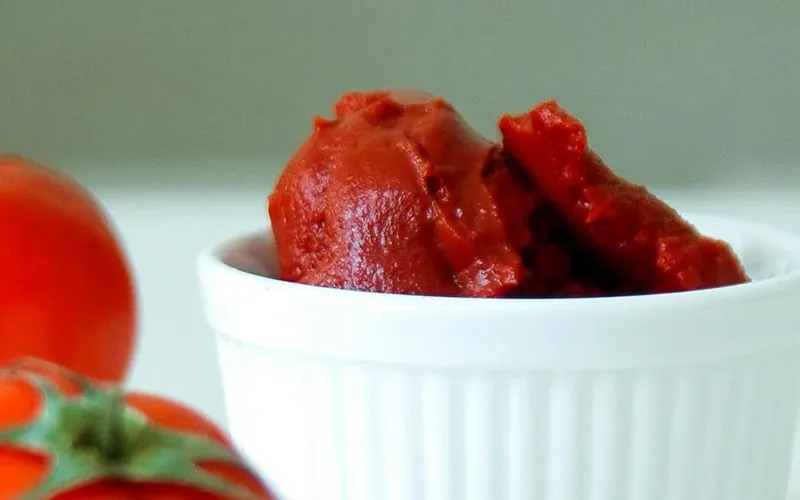
Tomato Sauce & Paste
From hot break at the crusher to a cooled sauce in the tote, without browning the product on the wall.
+ Learn More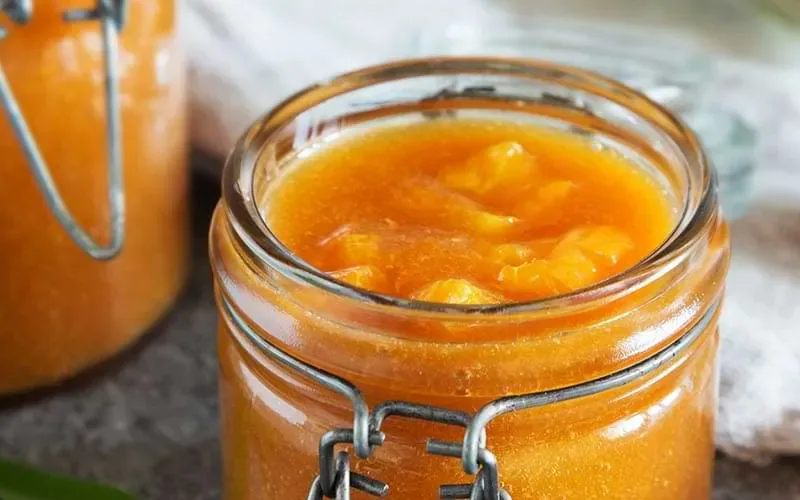
Applications
Fruit Preparations & Jams
High sugar, high viscosity, delicate fruit pieces and a wall that burns on if the approach is wrong.
+ Learn More
Applications
Purees & Baby Food
Smooth purees run the best coefficient on the sauce line; infant product runs the tightest process control.
+ Learn More