
1-805-484-2992
Quotes - Engineering - Sales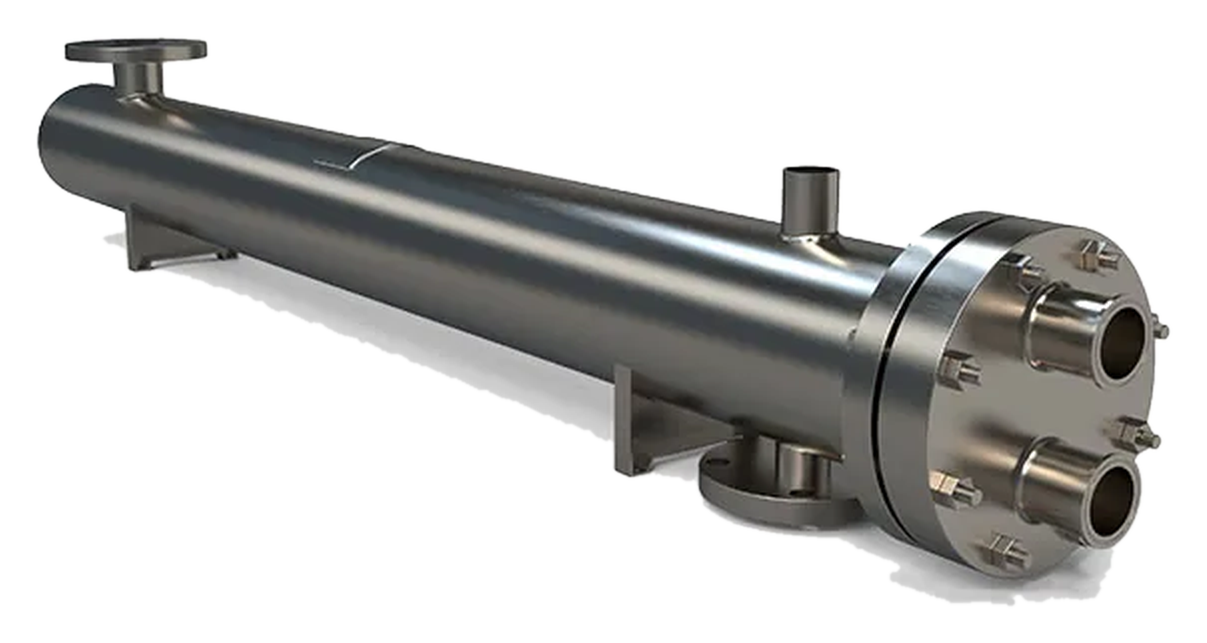
Steam-to-Water Units
| PRODUCT | TYPE | STYLE | RATING |
|---|---|---|---|
| Heat Exchanger | Shell & Tube | Steam-to-Water | 150 PSI / 375°F |
Specifications
Configuration & Size
Shell Diameter:
6" and 8"
Tube Length:
54", 72", 84" and 96"
Process Connections:
2" or 3" Tri-Clamp
Steam Inlet:
2-1/2" to 4"
Passes:
Two Pass
Design:
Sanitary or 3-A Sanitary
Materials
- Tubes: 304 or 316 Stainless Steel
- Tube Side: All Stainless Steel
- Head Closure: O-Ring Design
- Bundle: Removable, Straight Tube
Steam-to-Water Heaters Built for Sanitary Plants
Plant Steam on the Shell, Clean Water Through the Tubes
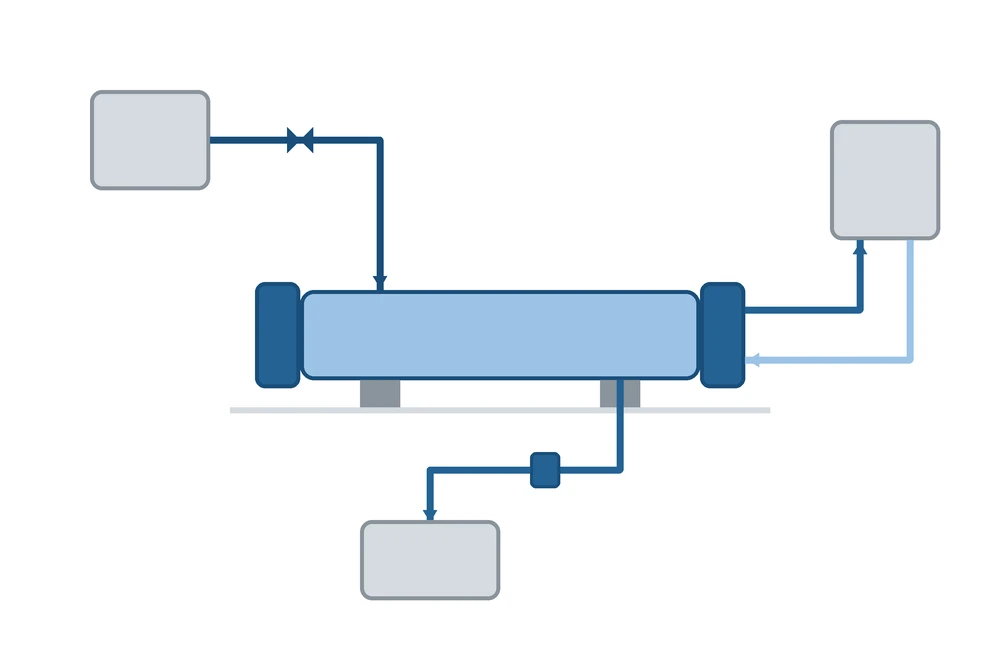
Every plant that runs CIP, washdown or a hot-water process loop has the same problem: steam is the cheap, dense heat source on site, but it cannot touch the water that ends up on product-contact surfaces. A steam-to-water shell and tube solves that with a wall between them. Plant steam enters the shell through a flanged nozzle, gives up its latent heat across the tube wall, and leaves as condensate through a smaller outlet at the bottom. The water runs inside the tubes, in two passes, and comes out as much as 90°F hotter than it went in.
What the part number tells you. The first digit is the shell diameter (6 or 8 inches) and the next two are the tube length (54, 72, 84 or 96 inches). The suffix carries the tube material: 304 stainless for general food and dairy service, 316 stainless with the 3-A designation where the water is a product-contact utility and the plant inspector will ask for the mark. Sixteen combinations cover flows from about 60 GPM on the 6-inch shells to 120 GPM and more on the 8-inch.
Where they land. CIP supply tanks that need to reach 160 to 180°F on a schedule, hot water for bottle and case washers, brewery hot liquor, pasteurizer make-up, and process heating loops where the product itself is heated in a second exchanger by the water this one makes. Because the water side is all stainless with tri-clamp connections, the unit sits in the sanitary piping like any other fitting and cleans in place with the rest of the line.
The removable bundle. The O-ring head design lets the head come off and the straight-tube bundle slide out of the shell for inspection or replacement. Every unit on this page has a matching spare bundle where one is catalogued, so a fouled or damaged bundle is a part, not a new exchanger. The pages below give connection sizes, surface area and a standard-condition performance point for each unit.
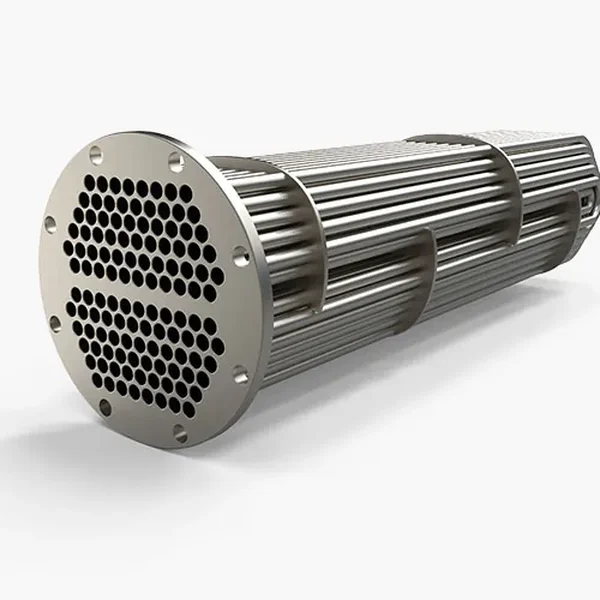
Straight-tube bundles in 304 or 316 stainless, removable through the O-ring head for inspection or exchange.
Request a QuoteSteam-to-Water Applications



Sizing a Steam-to-Water Unit From Three Numbers
The whole selection comes down to water flow, the temperature rise you need, and the steam pressure at the exchanger. Multiply flow in GPM by the rise in degrees F by 500 and you have the duty in BTU per hour; that is what the steam has to deliver and what the surface area has to pass. Each part-number page on this site quotes a standard-condition point, for example 60 GPM raised 57°F per pass on 50 PSI steam for the smallest 6 x 54 unit, so the family can be walked quickly: longer shells add surface and rise, the 8-inch shells add flow.
Steam pressure matters more than most buyers expect. Fifty PSI saturated steam is about 298°F; drop the supply to 15 PSI and the shell-side temperature falls to 250°F, the driving temperature difference shrinks, and the same unit heats noticeably less water. Size for the lowest pressure the exchanger will actually see, not the header rating.
Condensate handling is the other half of the job. A properly sized trap and a condensate outlet that drains freely keep the shell full of steam rather than water; a unit that floods with condensate loses surface to sub-cooling and its output drops without warning. Give the steam control valve a modulating actuator on outlet water temperature and the unit will hold set point across the flow range. Call and talk it through with an engineer: 1-805-484-2992